When you wander through the historic streets of Istanbul or gaze at the intricate architecture of Edirne, it is impossible not to feel a lingering rhythm in the air. Music in the Ottoman Empire was never just a form of background entertainment; it was the very heartbeat of society, pulsating through every layer of life. From the gilded halls of Topkapı Palace to the dusty public squares where storytellers captivated crowds, music served as a bridge between the mortal world and the divine, the ruler and the ruled. It was a sophisticated language that communicated power, sorrow, devotion, and joy, shaping the cultural identity of an empire that spanned three continents.
The Ottoman approach to sound was holistic, treating music as a science, a therapy, and a spiritual path simultaneously. Unlike Western traditions that relied heavily on written scores, Ottoman music was largely an oral tradition, passed down through the meşk system—a master-apprentice relationship that ensured the soul of the music was transmitted alongside the technique. Today, as we look back at this immense heritage, we can still hear the echoes of a civilization that believed a melody could cure an illness or win a war before a single sword was drawn.
The Sound of Authority: Ottoman Court Music
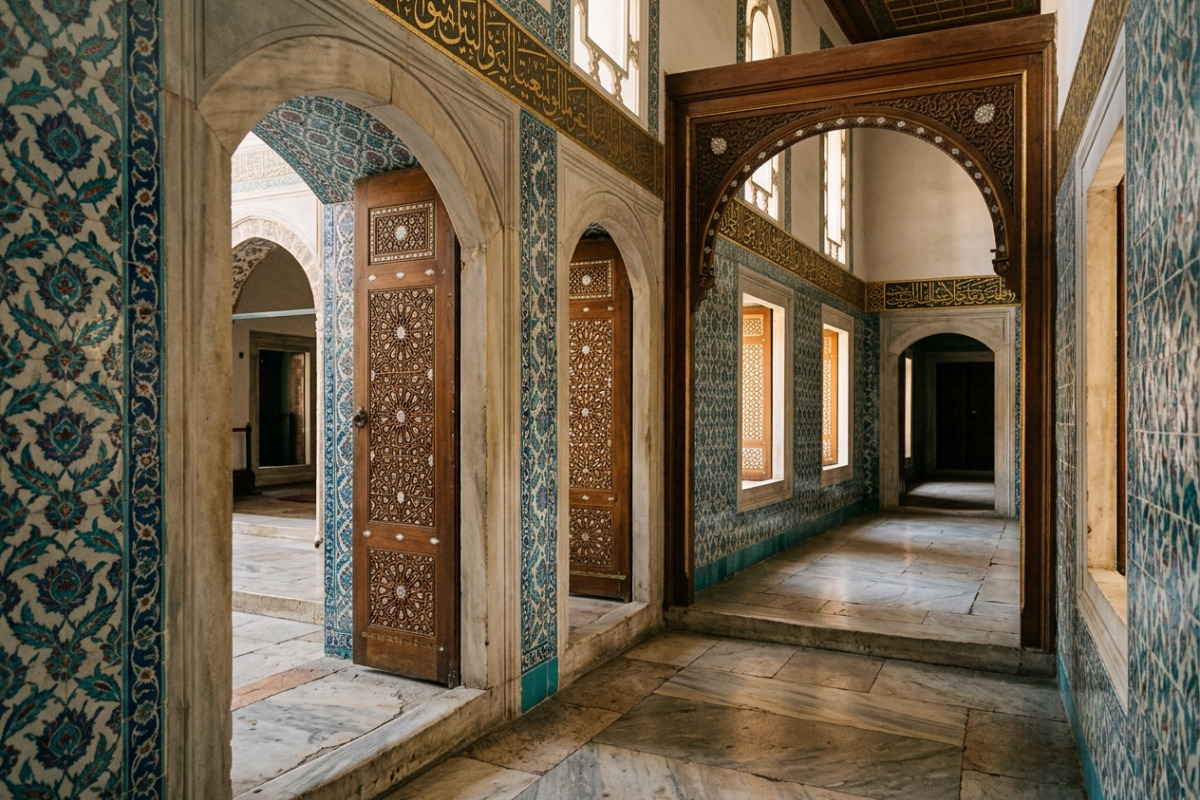
Deep within the inner courtyards of the palace, music was a serious intellectual pursuit, cultivated with the same rigor as mathematics or astronomy. The Ottoman court music, often referred to as Klasik Türk Musikisi, was refined, complex, and deeply emotional. It relied on the Makam system, a unique modal structure that goes far beyond the major and minor scales of Western music. Each makam was believed to influence the human soul in specific ways—some were conducive to deep thought, others to relaxation, and some were even used to induce sleep or courage.
The composers of the court were often the Sultans themselves. Sultan Selim III, for instance, was a virtuoso ney player and a composer whose works are still performed today. In the palace school known as the Enderun, talented youths were trained not just in governance but in the arts, ensuring that the empire's administrators were men of culture and refinement. This music was intimate, performed in small chambers, intended for a select audience who could appreciate the subtle microtones and the poetic depth of the lyrics.
Key Instruments of the Court
The instruments used in the palace were chosen for their ability to produce delicate, nuanced sounds that mirrored the human voice. Unlike the loud instruments of the outdoors, these were crafted for introspection and beauty.
- The Tanbur: A long-necked lute with a distinctive, resonant sound that is often considered the most 'Ottoman' of all instruments. Its fret system allows for the precise playing of microtones essential to the makam system.
- The Ney: A reed flute that holds a central place in both court and religious music. Its breathy, melancholic timbre is often described as the sound of a soul longing for its origin.
- The Kanun: A trapezoidal zither with numerous strings, played with plectrums attached to the index fingers. It provides the rhythmic and melodic backbone of the ensemble, capable of rapid, cascading runs.
- The Kemence: A small, pear-shaped bowed instrument that produces a sweet, continuous sound, often weaving intricate counter-melodies around the singer's voice.
The Spiritual Rhythm: Sufism and the Soul
While the court used music for aesthetic and intellectual pleasure, the Sufi lodges (tekkes) utilized it as a vehicle for transcendence. The Mevlevi Order, known to the west as the Whirling Dervishes, placed music at the center of their worship rituals. For the Sufis, music was not composed; it was 'revealed.' The Ayin-i Şerif, the musical ceremony accompanying the whirling dance, represents a spiritual journey of the soul's ascent to perfection.
In this context, music was functional and sacred. The deep, resonating sound of the Ney was symbolic of the human human being—cut from the reed bed (separation from God) and hollowed out (emptied of ego) to let the divine breath pass through. The rhythm of the Kudüm (small drums) represented the heartbeat of the cosmos. This musical tradition was inclusive, often blending with the court music, as many court musicians were also members of Sufi orders. This cross-pollination enriched both the secular and sacred musical landscapes, creating a shared language of devotion.
The Thunder of War: The Janissary Bands
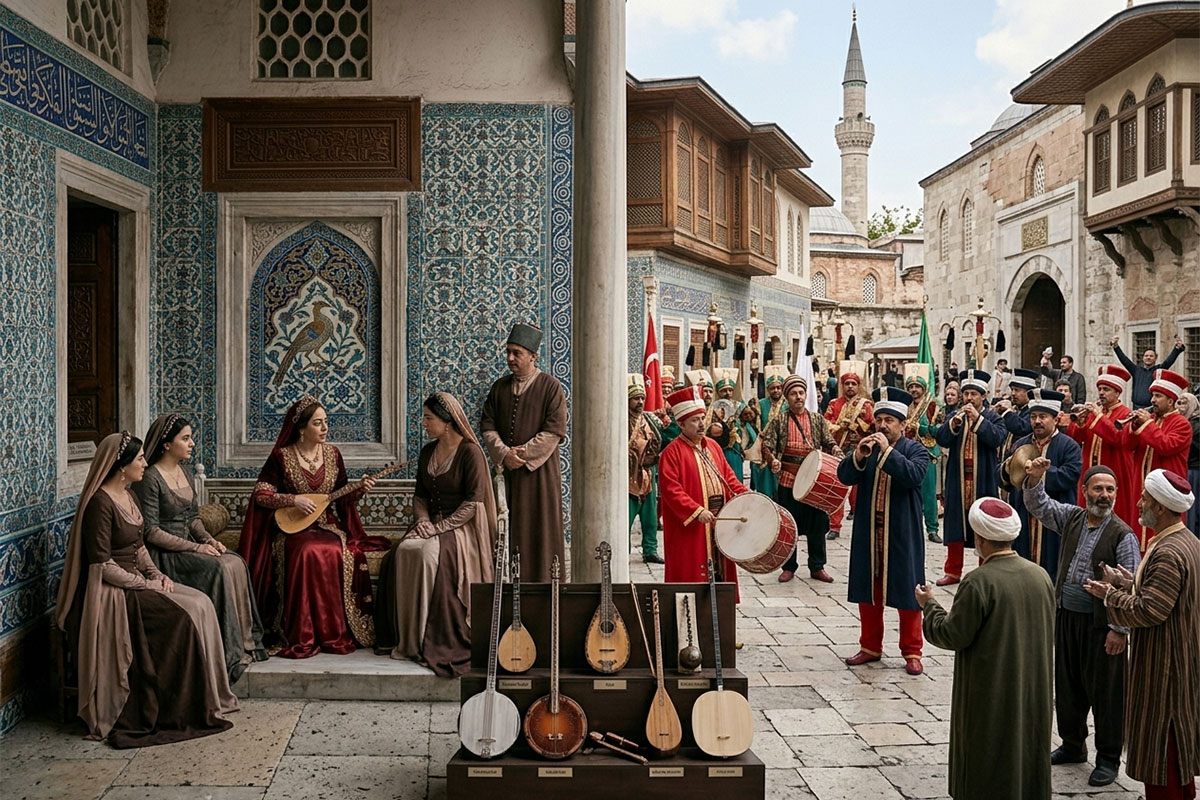
Stepping out of the quiet lodges and silent palace corridors, the Ottoman soundscape changes drastically with the Mehter. Recognized as the world's first military marching band, the Janissary band was a psychological weapon as much as a musical unit. The thunderous sound of the Davul (large drum) and the piercing cry of the Zurna (oboe) were designed to terrify enemies and rally Ottoman troops. The rhythm of the Mehter is distinctive, often characterized by a heavy, driving beat that mimics the stride of a marching army.
The influence of this music reached far beyond the battlefield. In the 18th century, European composers like Mozart and Beethoven were fascinated by the 'Alla Turca' style, incorporating the percussive elements of the Mehter into their own compositions. It was a projection of Ottoman power through sound, turning the public square and the battlefield into a stage where the empire's grandeur was audible from miles away.
Comparison of Musical Contexts
To understand the diversity of Ottoman musical culture, it is helpful to look at how different environments dictated the style and purpose of the music.
| Musical Tradition | Primary Setting | Primary Purpose | Dominant Atmosphere |
| Ottoman Classical | Palace (Enderun), Mansions | Intellectual pleasure, aesthetic refinement | Sophisticated, Intimate, Melancholic |
| Sufi Music (Tasavvuf) | Tekkes (Lodges), Mosques | Spiritual ascension, worship (Dhikr) | Meditative, Trance-inducing, Sacred |
| Mehter (Military) | Battlefields, Public Parades | Psychological warfare, troop morale | Loud, Rhythmic, Majestic |
| Folk Music (Halk) | Villages, Coffeehouses | Storytelling, weddings, daily life | Raw, Energetic, Communal |
Music in the Public Square: The Fasıl and Coffeehouse Culture
Beyond the elite circles and military parades, music was the lifeblood of the common citizen. The Fasıl tradition, a suite of songs played in the same makam, became a staple of entertainment in urban centers. Coffeehouses were the social hubs of the era, acting as the internet of the 17th and 18th centuries. Here, Aşıks (wandering bards) would play the Saz (a long-necked lute) and recite epic tales of love, heroism, and tragedy. These performances were interactive, with the audience often joining in or requesting specific stories.
In the public squares during festivals, circumcision ceremonies, or weddings, music brought people together across social classes. The rhythms were simpler, more dance-oriented, often featuring the Davul and Zurna in a festive context rather than a military one. This folk tradition ensured that music was not the exclusive property of the aristocracy but a shared cultural treasure that narrated the joys and struggles of everyday life.
The Enduring Legacy
The role of music in Ottoman culture was multifaceted, acting as a mirror that reflected the empire's complexity. It was a tool for governing, a medium for praying, a weapon for fighting, and a way of celebrating. Today, the legacy of this rich musical history continues to influence modern Turkish music and world music alike. Whether it is the haunting sound of a Ney in a modern fusion track or the disciplined structure of a classical choir, the echoes of the Ottoman past remain alive, inviting listeners to close their eyes and travel back to a time when life was lived to a different, yet timeless, rhythm.