When we whisper the word "Harem," our minds often drift toward Orientalist paintings filled with languid figures and an air of forbidden mystery. However, standing in the tiled courtyards of Topkapi Palace today, the echoes of the past tell a much more complex and disciplined story. The Harem, derived from the Arabic word haram meaning "forbidden" or "sacred," was not merely a residence for the Sultan's family; it was a highly organized institution, a center of political power, and a rigorous school for women. For the hundreds of women who lived within these secluded walls, life was defined by a strict set of rules, intense education, and a constant strive for status within a fascinating social pyramid.
To truly understand the daily rhythm of this secluded world, one must look past the jewels and silks to see the human element—the ambition, the camaraderie, and the routine duties that filled the daylight hours. Far from a place of idleness, the Harem was a buzzing hive of activity where every woman had a specific role to play. From the break of dawn until the oil lamps flickered out at night, the residents navigated a world where etiquette was paramount and a single misstep could cost one their position, while intelligence and grace could elevate a novice to the pinnacle of imperial power.
The Strict Hierarchy: A Pyramid of Power
The social structure of the Harem was arguably one of the most meritocratic yet ruthless systems in the Ottoman Empire. Upon entering the Harem, usually as young girls from diverse backgrounds, novices were stripped of their former identities and placed at the very bottom of the ladder. There was no guarantee of seeing the Sultan; in fact, the vast majority of women lived and died here without ever exchanging a word with the monarch. They were part of a massive household staff, managed with military precision by the Queen Mother, or Valide Sultan.
The hierarchy was rigid, and upward mobility was achieved through beauty, talent, and intelligence. A woman’s rank dictated everything from the quality of fabrics she wore to the number of servants she commanded and the size of her living quarters. Understanding these ranks is essential to grasping the dynamics that played out in these corridors.
| Rank/Title | Role & Status | Key Responsibilities |
| Valide Sultan | The Queen Mother; the absolute ruler of the Harem. | Managed the entire household budget, arranged marriages for princesses, and advised the Sultan on state matters. |
| Haseki Sultan | The Chief Consort; mother of a male heir. | Held significant political sway, second only to the Valide, and focused on raising potential future Sultans. |
| Ikbals | Favorites; women who had caught the Sultan's eye. | Granted private apartments and servants; they were in the running to become Haseki if they bore a child. |
| Gedikli | Ladies-in-Waiting; skilled servants. | Served the Sultan or high-ranking women directly; experts in music, service, or administration. |
| Cariye (Novices) | The lowest rank; beginners. | Underwent intense schooling and performed general domestic duties while hoping for promotion. |
Beyond the Veil: Education and Daily Routines
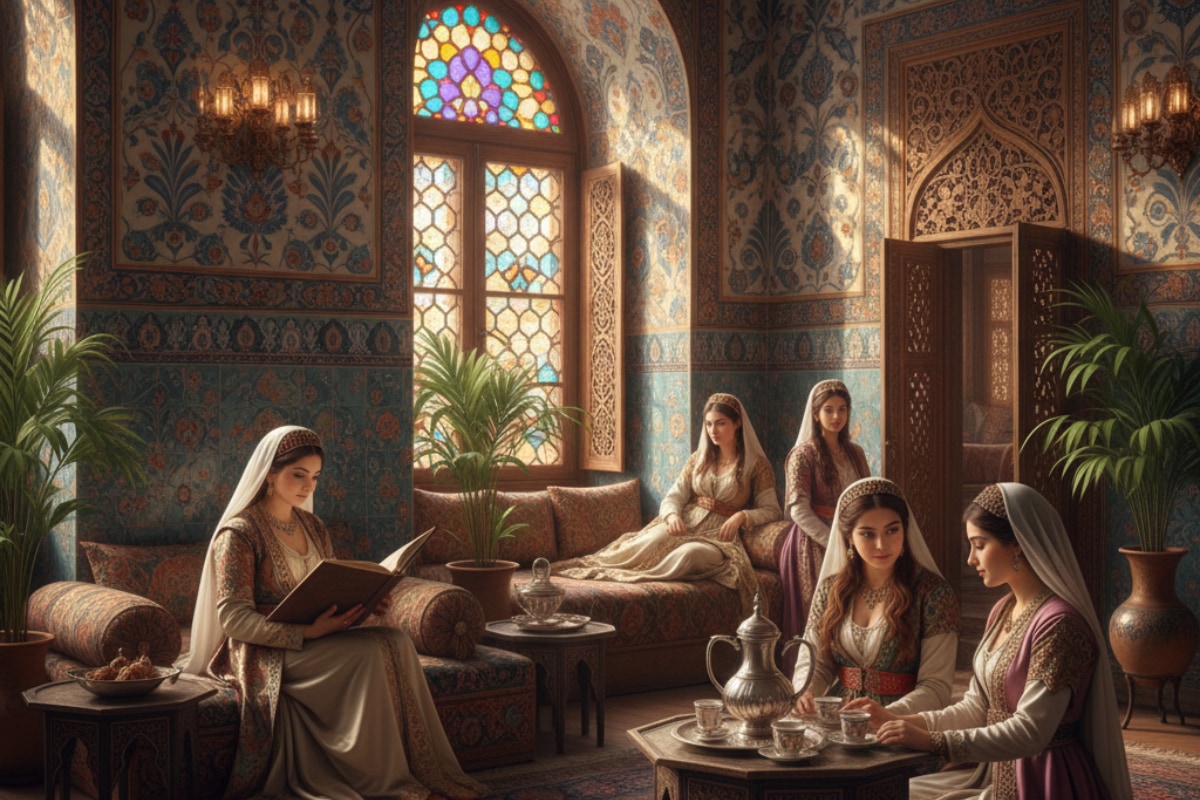
Contrary to popular belief, the Harem functioned primarily as an elite finishing school. The daily routine for a novice, or cariye, began early with morning prayers, followed by a rigorous schedule of lessons. These women were expected to become the most cultivated individuals in the empire. They were taught to read and write Ottoman Turkish, a complex blend of Turkish, Persian, and Arabic, which was a skill not even common among the general male population outside the palace.
Imagine a young Cariye named Ayşe, arriving from a small village in the Balkans. Suddenly, she's immersed in a world of calligraphy lessons, learning to perfectly render the flowing Arabic script, or practicing the oud under the watchful eye of a seasoned musician. These skills weren't merely decorative; they were tools for advancement and influence.
The curriculum was diverse and demanding. Women learned the intricacies of sewing and embroidery, producing the exquisite textiles that the empire was famous for. Music played a central role in daily life; the sound of the oud, the kanun, and singing voices would often drift through the courtyards as women practiced for hours. Additionally, they were instructed in theology, mathematics, and, most importantly, the complex etiquette of the court—how to walk, how to pour coffee, and how to speak with absolute grace.
- Religious Studies: Deep understanding of the Quran and Islamic traditions.
- Arts and Crafts: Mastery of embroidery, calligraphy, and fashion.
- Musical Training: Learning instruments and vocal performance for entertainment.
- Social Etiquette: The art of conversation, silence, and serving with humility.
The Hamam: A Sanctuary of Socializing
Hygiene was an obsession in Ottoman culture, and the Harem was no exception. The Hamam (Turkish Bath) was not just a place for cleansing; it was the social heart of the women's quarters. In the warm, marble-clad rooms filled with steam and the scent of rose water and laurel soap, the strict hierarchies relaxed slightly. Here, women would gather to bathe, groom, and share the latest news or gossip.
The ritual of the bath was elaborate. High-ranking women like the Haseki or Valide Sultan had their own private marble basins and were attended to by lower-ranking girls who would scrub them with kese mitts and wash their hair with scented waters. For the younger women, the Hamam was a place to bond, laugh, and escape the rigid discipline of their lessons for a few hours. It was within these steamy walls that alliances were often whispered and friendships cemented.
One famous anecdote tells of a Cariye who overheard a plot against the Valide Sultan in the Hamam. She risked her own safety to warn the Queen Mother, earning her favor and a swift promotion. This story highlights the Hamam's role as a place of both vulnerability and opportunity.
The Political Web and the Eunuchs
While the women lived in seclusion, they were never truly cut off from the world, thanks to the corps of Eunuchs. The Chief Black Eunuch (Kızlar Ağası) was the vital link between the Harem and the Sultan's court. He was one of the most powerful men in the empire, serving as the messenger for the Valide Sultan. Through these intermediaries, powerful women could influence state appointments, orchestrate charitable foundations, and even intervene in diplomatic matters.
The architecture itself reflects this separation and connection. The "Golden Road" (Altınyol) is a narrow passage connecting the Harem to the Sultan’s private quarters. It is said that the Sultan would throw gold coins to the concubines lining this path on festive days. However, for the women, navigating the politics was as treacherous as it was rewarding. Rivalries were intense, especially among those vying for the Sultan's favor, as the mother of the next Sultan would ultimately rule the Harem.
Consider the story of Roxelana (Hürrem Sultan), a Cariye who rose to become the Haseki Sultan and wielded immense political power. Her influence was so profound that she corresponded with foreign leaders and commissioned numerous public works projects. Her story is a testament to the potential for women within the Harem to shape the course of history.
The Legacy of the Harem Today
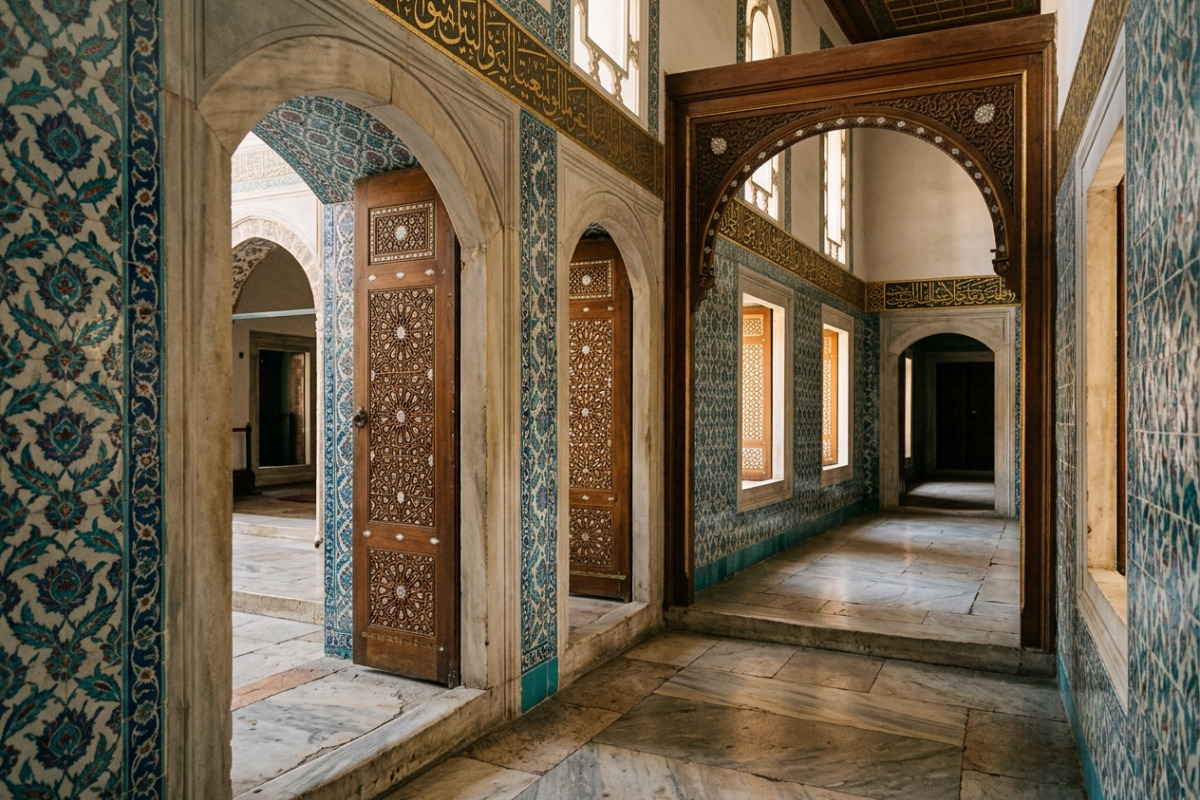
Walking through the Harem section of Topkapi Palace in January 2026, visitors are often struck by the contrast between the opulent tile work and the relatively small, confined living spaces. The intricate Iznik tiles, with their floral motifs and Quranic inscriptions, were meant to bring the beauty of the outside gardens into these enclosed spaces. It was a golden cage, certainly, but one filled with educated, powerful, and resilient women who shaped the course of history.
Understanding their daily reality—the discipline, the education, and the hierarchy—allows us to respect them not as objects of fantasy, but as integral players in the Ottoman story. They were the silent partners of the empire, managing a complex household and raising the future leaders of the world behind these heavy, iron-studded doors.