Stepping through the massive Imperial Gate of Topkapi Palace is more than just entering a museum; it is a transition into the heart of an empire that spanned three continents for centuries. As one of Istanbul’s most sprawling and historically dense locations, the palace complex can feel overwhelming to the unprepared traveler. Unlike a single-building museum, Topkapi is a vast collection of pavilions, courtyards, gardens, and administrative chambers that requires a bit of strategy to navigate effectively. Whether you are a history buff eager to see the Sacred Relics or a photographer chasing the perfect Bosphorus view, understanding the layout before you arrive is the key to a memorable experience. This guide is designed to help you chart your course through the Ottoman sultans' residence without getting lost in the crowds or missing the hidden gems.
Getting There and Crossing the Threshold
Located at the tip of the Historic Peninsula, Topkapi Palace dominates the skyline where the Golden Horn meets the Sea of Marmara. For most visitors staying in the Sultanahmet or Beyoğlu districts, the most efficient way to reach the museum is via the T1 Bagcilar-Kabatas tram line. You will want to disembark at the Sultanahmet or Gülhane station. From there, it is a short, scenic walk past the Hagia Sophia to the main entrance. The cobblestone paths leading up to the palace set the atmosphere immediately, but they also serve as a reminder to wear your most comfortable walking shoes.
The primary entry point for all visitors is the Imperial Gate (Bab-ı Hümayun), situated directly behind the Hagia Sophia. This monumental gate leads you into the First Courtyard. It is crucial to note that while the First Courtyard is accessible to the public without a ticket, the actual museum checkpoints are located further inside, at the Gate of Salutation (Bab-us Selam). On busy days, the area between these two gates can become quite crowded, so having a clear plan for ticket redemption or digital pass usage will save you valuable time.
Deciphering the Layout: The Four Courtyards
Topkapi Palace is organized into four distinct courtyards, each serving a specific function in the daily life of the Ottoman court. Understanding this hierarchy helps you prioritize what to see and allows you to move from the outer public spaces to the inner private sanctuaries logically. Instead of wandering aimlessly, think of your visit as a linear journey deeper into the Sultan's private world.
| Courtyard | Historical Function | Key Highlights to Navigate |
| First Courtyard | Service area and parade ground (Alay Meydanı). | Hagia Irene Church, Imperial Mint, Ticket Offices. |
| Second Courtyard | Administrative center (Divan Square). | Imperial Council Chamber, Palace Kitchens, Justice Tower. |
| Third Courtyard | Private educational & residential area (Enderun). | Audience Chamber, Library of Ahmed III, Sacred Relics. |
| Fourth Courtyard | Sultan's private gardens and pavilions. | Baghdad Pavilion, Mecidiye Kiosk, Bosphorus Views. |
The Administrative Heart: The Second Courtyard
Once you pass through the ticket checks at the Gate of Salutation, you enter the Second Courtyard. This expansive park-like setting was the administrative hub of the empire. To your right, you will find the immense Palace Kitchens, which house one of the world's finest collections of Chinese celadon and porcelain. To your left stands the Imperial Council Chamber (Divan-ı Hümayun), where viziers debated state matters. A practical tip for navigation here is to visit the Council Chamber first, as it is close to the entrance, before crossing the courtyard to explore the kitchens, which can take more time due to the volume of exhibits.
The Inner Sanctum: The Third and Fourth Courtyards
Passing through the Gate of Felicity brings you to the Third Courtyard, the private domain of the Sultan and the palace school. This area is denser with exhibits and requires patience. The Audience Chamber, right at the entrance, is a quick but impressive stop. However, the main draw here is the Imperial Treasury and the Chamber of Holy Relics. These sections often have queues, so if you arrive early in the morning, make a beeline for the Third Courtyard immediately to beat the tour groups.
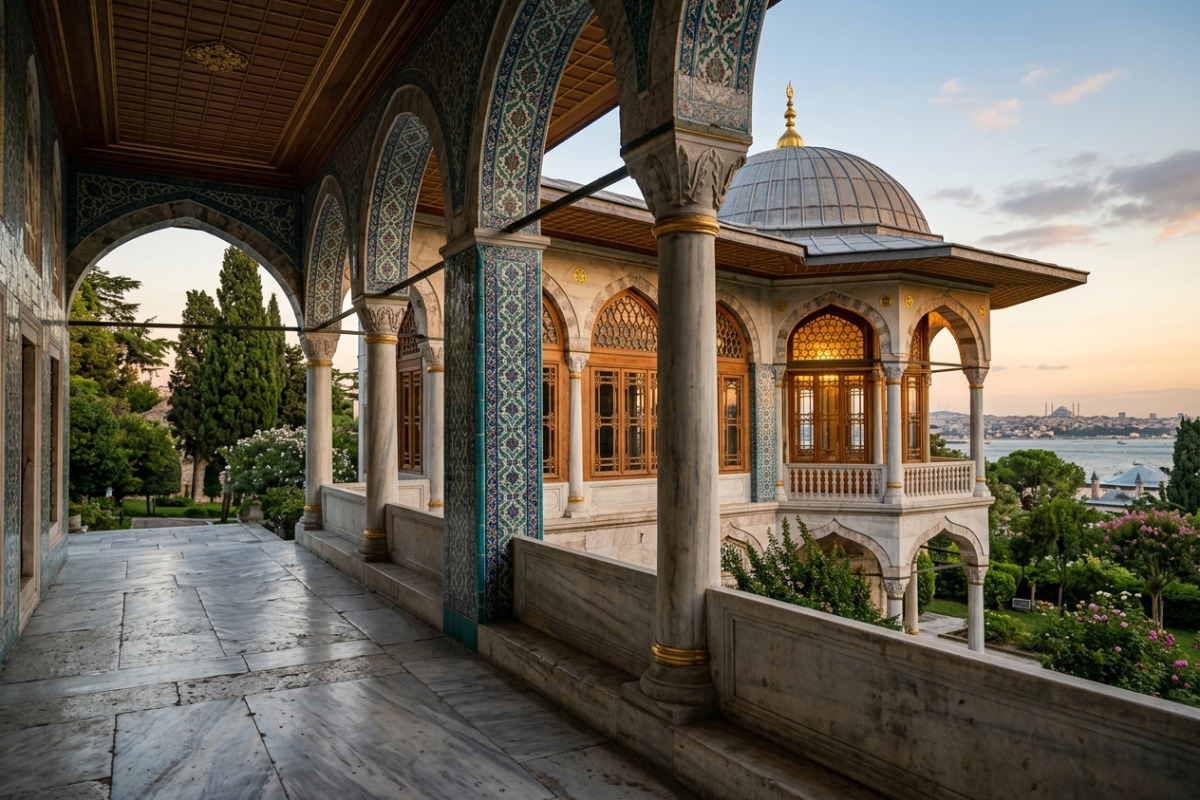
The Fourth Courtyard feels entirely different; it is an open, airy garden filled with decorative pavilions (kiosks). This is the best place to take a break. The Baghdad Pavilion and the Revan Pavilion offer stunning examples of Iznik tile work, while the terrace near the Mecidiye Kiosk provides panoramic photo opportunities of the Bosphorus and the Asian side of Istanbul. It is the perfect spot to catch your breath after navigating the enclosed exhibit halls.
The Harem: A Palace Within a Palace
The Harem is physically located within the palace grounds but operates almost as a separate museum due to its distinct layout and separate entrance requirements. You enter the Harem from the western side of the Second Courtyard, beneath the Tower of Justice. This labyrinth of corridors, courtyards, and chambers was the private residence of the Sultan, the Queen Mother (Valide Sultan), and the concubines. Navigating the Harem is strictly one-way; once you enter, the route guides you through the Eunuchs’ Courtyard, the Valide Sultan’s apartments, and the majestic Imperial Hall.
The Harem was more than just a residence; it was a complex social ecosystem. The Valide Sultan, or Queen Mother, wielded significant power and influence within the Harem and the Ottoman court. Concubines were not merely objects of the Sultan's affection but were educated in various arts and skills, competing for his attention and the chance to bear a son, thus securing their future. The architecture within the Harem reflects this hierarchy, with increasingly opulent chambers reserved for those of higher status.
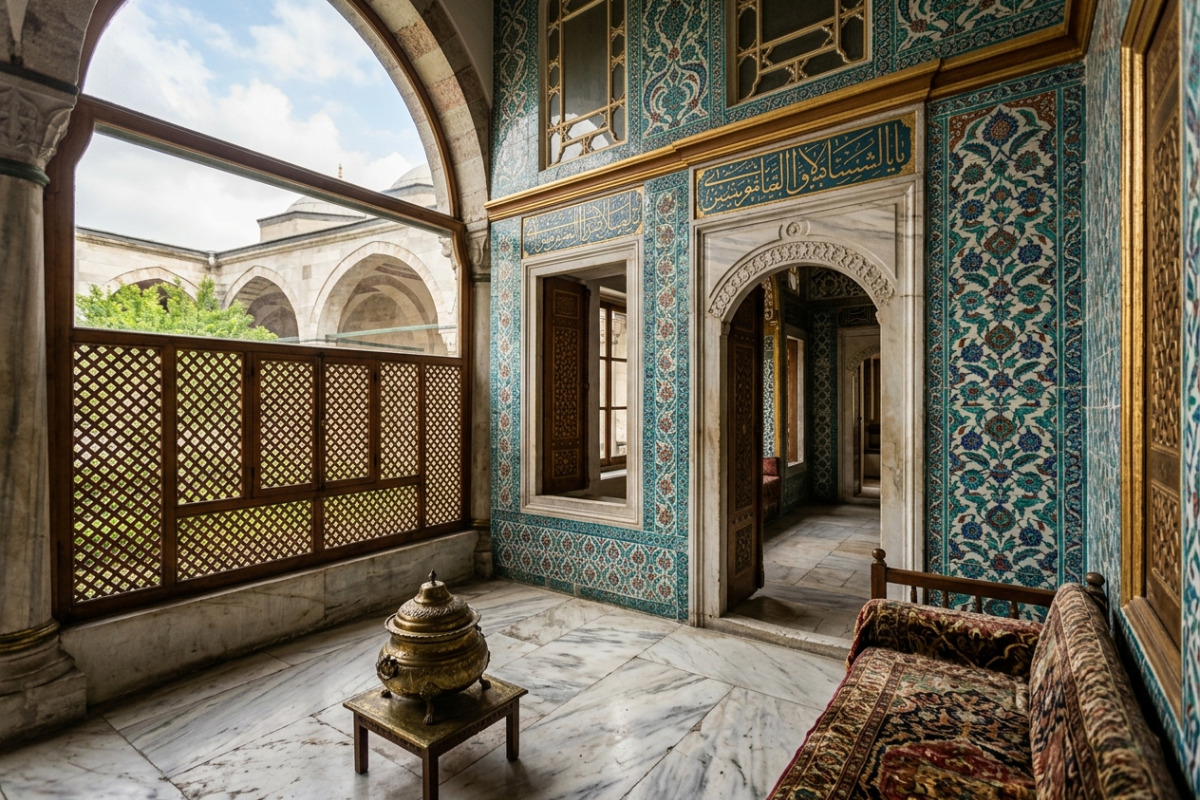
Because the Harem consists of narrow corridors and smaller rooms, it can feel claustrophobic during peak hours. The architecture here is arguably the most ornate in the entire complex, featuring intricate tiles, gilded ceilings, and stained glass. Plan to spend at least 45 minutes to an hour here alone. If you are visiting during the summer months or crowded weekends, try to visit the Harem either first thing in the morning or late in the afternoon to appreciate the intricate details without being rushed by the flow of visitors. Note that entry to the Harem requires a separate ticket purchased in addition to the Topkapi Palace entry ticket.
Essential Exhibits You Should Not Miss
With thousands of artifacts on display, it is impossible to give every item equal attention. To navigate efficiently, focus on the "Big Three" collections that define the Topkapi experience. First, the Hagia Irene Church (located in the First Courtyard but requiring a separate ticket) is a stunning example of Byzantine architecture predating the Ottoman Empire. It often hosts concerts and special events.
Second, the Chamber of Holy Relics in the Third Courtyard contains items belonging to Prophet Muhammad and other prophets, maintained with continuous Quranic recitation that adds a spiritual layer to the visit. It is a moving experience regardless of your faith, but respect and silence are paramount here.
Third, the Imperial Treasury is home to the famous Spoonmaker's Diamond and the Topkapi Dagger. The craftsmanship of the emerald-encrusted weaponry and jewel-studded thrones is breathtaking. Finally, do not overlook the Palace Kitchens in the Second Courtyard. Beyond the porcelain, the sheer size of the chimneys and the culinary history displays give you a fascinating glimpse into the logistics of feeding thousands of court members daily.
Practical Tips for a Seamless Visit
To ensure your visit in 2026 is as smooth as possible, preparation is key. The museum covers a large area with uneven ground, and the weather in Istanbul can change rapidly. Here are some actionable tips to enhance your experience:
- Timing is Everything: The museum is generally closed on Tuesdays. Mondays and weekends tend to be the busiest. Wednesday or Thursday mornings usually offer a slightly calmer atmosphere.
- Dress Appropriately: While there is no strict dress code for the courtyard grounds, the Chamber of Holy Relics requires modest attire. Visitors should have shoulders and knees covered. Carrying a light scarf is always a good idea for flexibility.
- Stay Hydrated: There are limited cafes inside the museum complex (mostly in the Fourth Courtyard and near the Harem exit). Bring a water bottle, especially if you are visiting during the warmer months, as exploring the grounds involves a significant amount of walking.
- Audio Guides are Essential: The signage is informative, but the stories behind the rooms are what bring Topkapi to life. Renting an audio guide at the entrance or downloading the official museum app helps you navigate the context of what you are seeing without needing a private guide.
- Check Restoration Schedules: As with any historic site of this age, maintenance is ongoing. Occasionally, specific pavilions or sections of the Harem may be closed for restoration. Check the official notices at the entrance to manage your expectations.
- Plan for Tickets and Opening Hours: Topkapi Palace generally opens around 9:00 AM and closes around 6:00 PM, but these hours can vary seasonally.
Visiting Topkapi Palace is a marathon, not a sprint. By understanding the flow from the administrative Second Courtyard to the private Fourth Courtyard, and treating the Harem as a special highlight, you can navigate this monumental site with confidence. Take your time to absorb the intricate tile work, the sweeping views of the Golden Horn, and the echoes of history that resonate off the stone walls. With a little planning, your journey through the home of the Sultans will be the highlight of your Istanbul adventure.