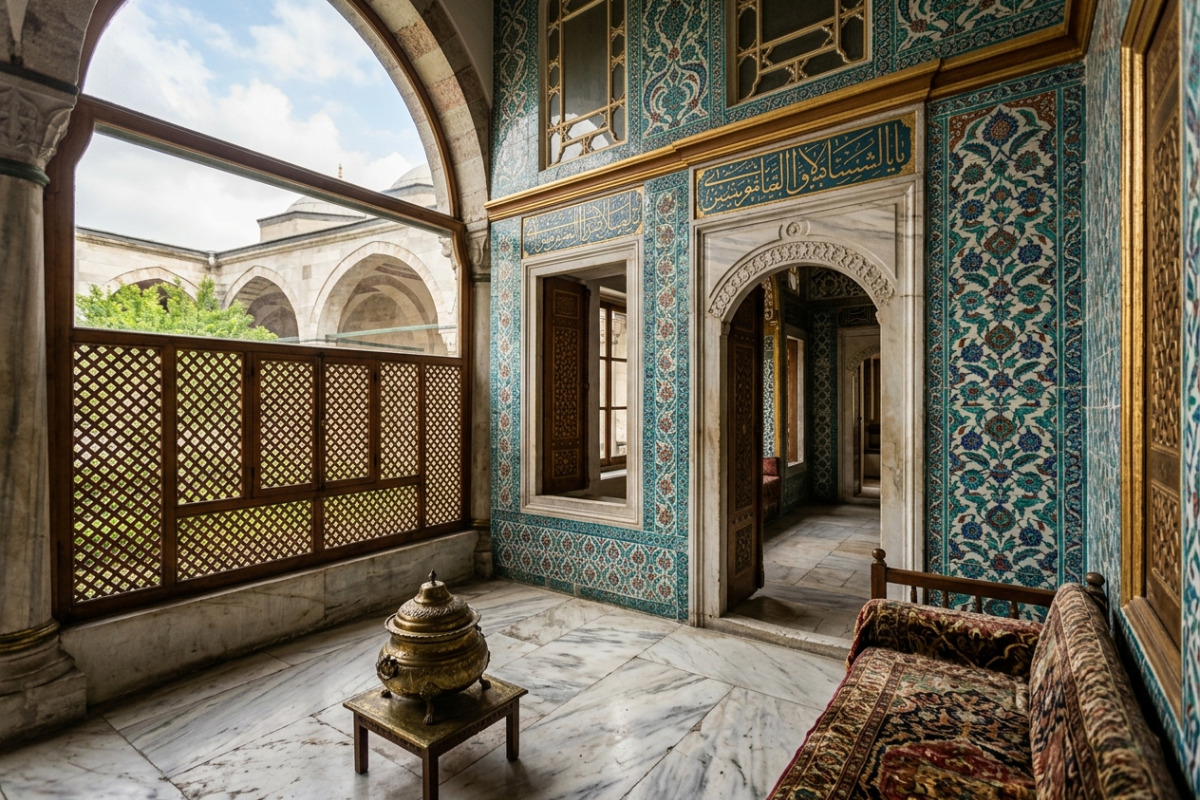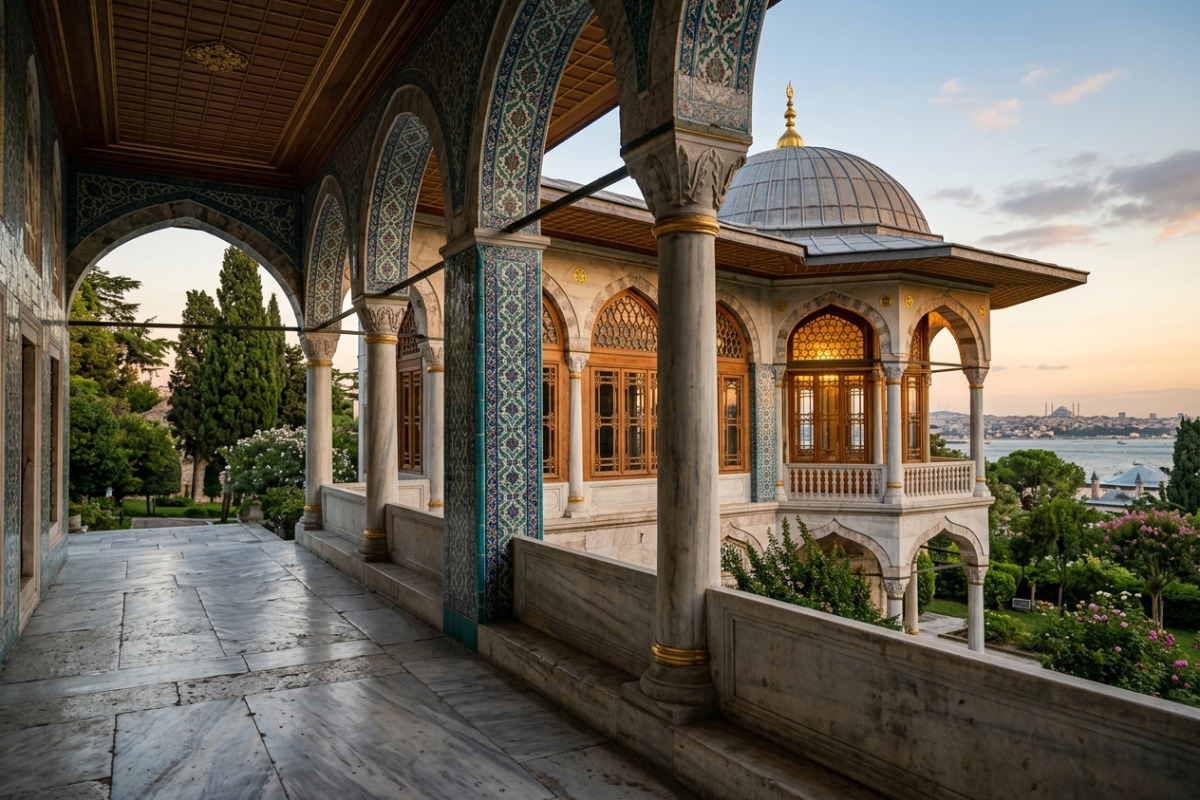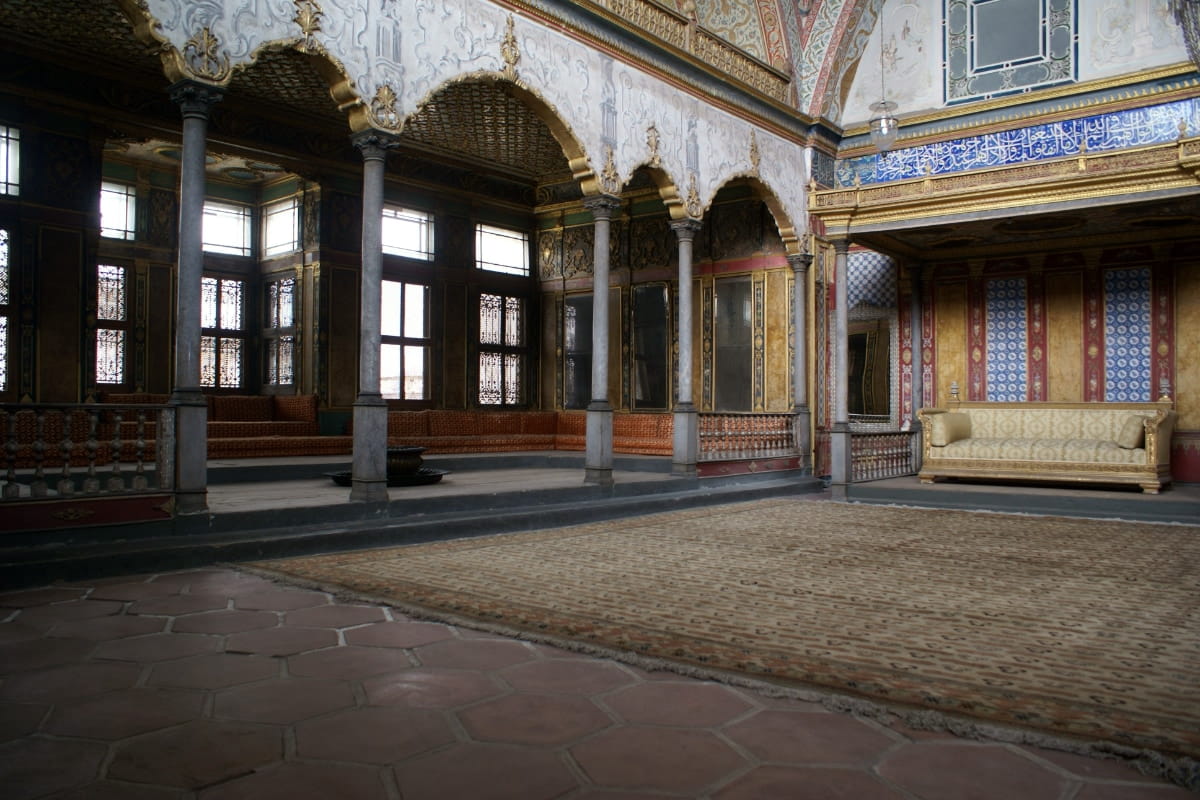
When walking through the intricate corridors of the Topkapi Palace in Istanbul, the air seems heavy with the scent of history, carrying the silent echoes of centuries past. For travelers and history enthusiasts alike, the Harem remains the most mysterious and misunderstood section of the Ottoman residence. Far from the Western orientalist fantasies of mere leisure and indulgence, the Harem was a highly organized, disciplined, and politically charged institution. It was here, behind the ornate lattice screens and heavy wooden doors, that women navigated a complex hierarchy to wield influence that often superseded the Grand Viziers. To understand the Ottoman Empire fully, one must listen closely to the whispers of the Harem, revealing the resilience and intellect of the women who lived there.
The word 'Harem' stems from the Arabic linguistic root 'haram,' signifying something forbidden, protected, or sacred. This definition is crucial in deconstructing the myths that have clouded our understanding for generations. It was the private sanctuary of the Sultan and his family, a domestic sphere where strangers were strictly forbidden to enter. While the outside world saw only high walls, inside lay a vibrant society governed by strict protocol, where education was paramount and meritocracy often dictated one's rise to power. The women residing here were not merely passive figures; they were the heartbeat of the dynasty, ensuring the continuity of the lineage and preserving the cultural sophistication of the court.
Beyond the Myths: The Structure of the Imperial Household
Contrary to popular belief, the Harem was more akin to an elite finishing school than a prison of pleasure. Young women, often brought from various corners of the empire and beyond—Circassia, Georgia, the Balkans—entered this world to receive an education that was unavailable to most women of that era. They were taught Turkish, theology, mathematics, embroidery, music, and the intricate rules of court etiquette. This rigorous training was designed to prepare them for life at the absolute pinnacle of Ottoman society. Whether they remained in the palace to rise through the ranks or were married off to high-ranking Pashas, these women became the cultural ambassadors of the Ottoman elite.
The internal organization of the Harem was a masterpiece of administrative precision. Every woman had a specific rank, duty, and salary, recorded meticulously in the palace ledgers. This system ensured order and provided a clear path for advancement based on skill, intelligence, and loyalty. It was a competitive environment, certainly, but one where ambition could be rewarded with immense prestige. The architecture of the Harem itself reflects this hierarchy, with the Queen Mother’s apartments being the most opulent, situated centrally to oversee the entire operation, symbolizing her role as the ultimate authority within the domestic sphere.
The Hierarchy of Power: From Novice to Queen Mother
Understanding the power dynamics of the Harem requires a look at the distinct roles women played. It was not a monolithic group but a stratified society where status meant everything. At the very bottom were the novices, and at the very top sat the Valide Sultan, a woman whose power often rivaled the Sultan himself.
| Rank / Title | Role & Significance | Level of Influence |
| Valide Sultan | The Queen Mother. The absolute head of the Harem. She ruled the household, managed the budget, and advised the Sultan on state matters. | Highest |
| Haseki Sultan | The Chief Consort. The favorite wife of the Sultan and mother of potential heirs. She held significant political sway and wealth. | Very High |
| Gözde (Favorite) | Women who had caught the Sultan's eye. They were given private apartments and servants, stepping onto the ladder of power. | Moderate |
| Kalfa | Administrative officers and supervisors. They managed the training of younger girls and the daily logistics of the Harem. | Operational |
| Cariye (Novice) | The lowest rank. These were young women in training, focusing on education and domestic duties, hoping to be promoted. | Low |
The Valide Sultan: The Matriarch
The Valide Sultan was the sun around which the Harem orbited. As the mother of the reigning Sultan, she commanded absolute respect and obedience. Her influence extended far beyond the domestic quarters; she was often a key political player, communicating with the Grand Vizier and foreign dignitaries. In January 2026, as historians continue to translate imperial archives, we find more evidence of Valide Sultans who funded massive construction projects, manipulated diplomatic relations, and stabilized the empire during times of transition. Her apartment was the command center, and her word was law.
The Sultanate of Women
The 16th and 17th centuries are often referred to as the "Sultanate of Women," a period where figures like Hürrem Sultan, Nurbanu Sultan, and Kösem Sultan exerted extraordinary influence over the Ottoman state. These women broke the traditional molds:
- Hürrem Sultan: She defied convention by legally marrying Sultan Suleiman the Magnificent, moving into the Topkapi Palace, and acting as his closest political advisor.
- Kösem Sultan: She served as regent for her sons and grandson, effectively ruling the empire for decades and navigating it through some of its most turbulent storms.
- Turhan Sultan: Known for her architectural patronage, she completed the New Mosque (Yeni Cami) in Eminönü, proving that women were vital to the physical legacy of Istanbul.
Daily Life Behind the Lattice
Life in the Harem was a blend of discipline, artistry, and leisure. The days began early with morning prayers, followed by lessons and duties. However, it wasn't all work. The Harem was also a center of fashion and aesthetics. Women spent hours in the hammams (Turkish baths), which were not just places for hygiene but social hubs where news was exchanged, and alliances were formed. The scent of rosewater, the steam of the bath, and the sound of splashing water created an atmosphere of communal bonding.
Fashion was a serious affair. The women of the Harem were trendsetters for the entire empire. They wore layers of expensive silks, brocades, and velvets, often embroidered with gold and silver threads. Their jewelry was exquisite, featuring emeralds, rubies, and diamonds set in intricate designs. Yet, despite the luxury, the psychological pressure was immense. The fear of losing favor, the rivalry for the Sultan’s attention, and the anxiety over the safety of their sons created a high-stakes environment where emotional intelligence was as valuable as physical beauty.
The Cultural and Architectural Legacy
The legacy of Ottoman women is not confined to the stories of intrigue; it is cemented in the very stones of Istanbul. These women were prolific philanthropists. Using their vast personal allowances, they established charitable foundations (waqfs) that built mosques, hospitals, soup kitchens, and fountains. These structures were not vanity projects but essential public services that supported the poor and the travelers.
For instance, the Haseki Hürrem Sultan Hamam stands today as a testament to this patronage, bridging the gap between the Hagia Sophia and the Blue Mosque. Similarly, the sprawling complexes built by Nurbanu Sultan in Üsküdar transformed the urban fabric of the Asian side of the city. By investing in public works, these women secured their legacy and legitimacy in the eyes of the public and the religious establishment, proving that their power was used for the benefit of the people.
Conclusion: Re-evaluating the Harem
The Ottoman Harem was a world of contradictions—a place of captivity yet a gateway to power, a secluded sanctuary that shaped the geopolitical landscape of the Mediterranean. To view it simply as a gilded cage is to ignore the agency, intelligence, and resilience of the women who lived there. They were politicians, mothers, patrons of the arts, and guardians of tradition.
As we explore the history of the Ottoman Empire, it is essential to look past the orientalist paintings and listen to the authentic voices of these women. Their secrets are slowly being unveiled through historical research, revealing a narrative of strength and survival. The whispers of the Harem are no longer silent; they tell the story of women who, despite the walls that confined them, managed to leave an indelible mark on history.