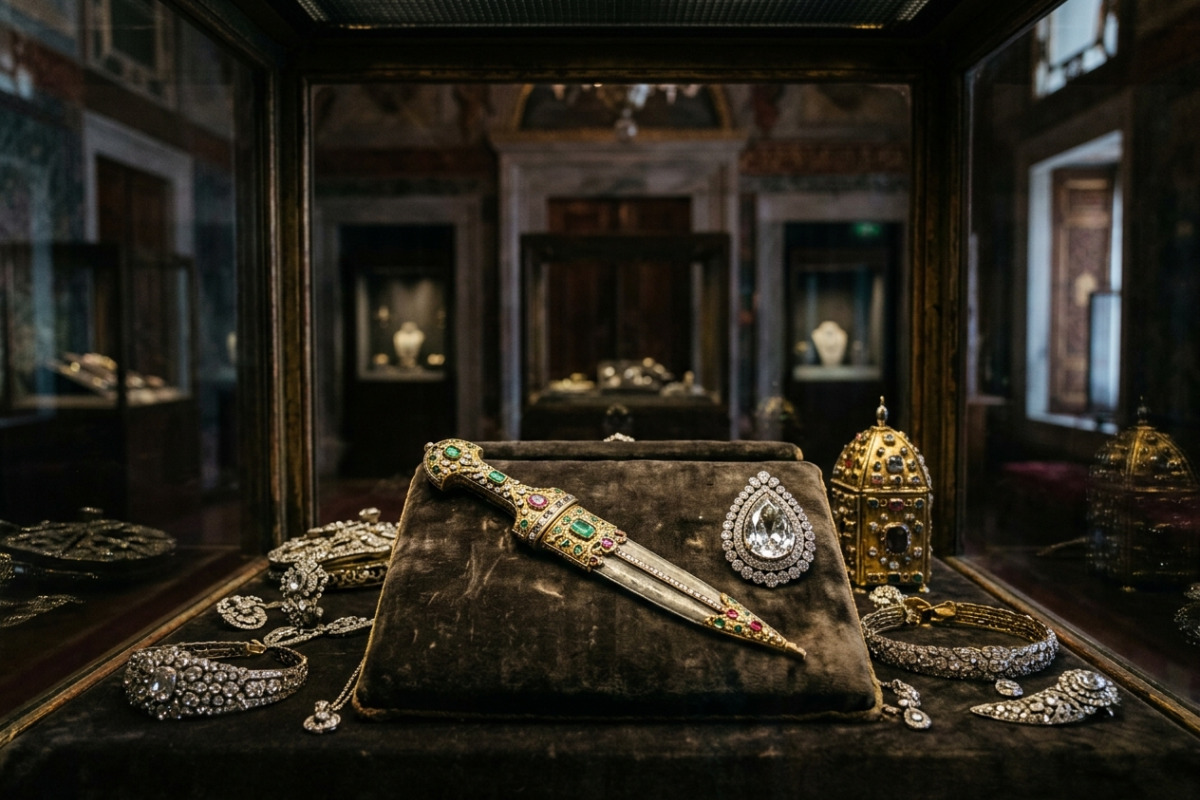
When travelers step through the Imperial Gate of Topkapi Palace, they are often prepared for the dazzling treasury, the intricate tiles of the Harem, and the sacred relics. However, the soul of this sprawling complex lies not within its stone walls, but in the living, breathing sanctuary that embraces them. As of January 2026, the gardens of Topkapi Palace remain a testament to the Ottoman mastery of harmonizing architecture with nature. These green spaces were never merely decorative; they were physical manifestations of paradise on earth, designed to offer silence, reflection, and political symbolism in equal measure. Walking through these grounds today offers a sensory bridge to the past, where the scent of roses and the rustle of cypress trees tell stories of an empire that deeply revered the natural world.
The Philosophy of Ottoman Landscape Design
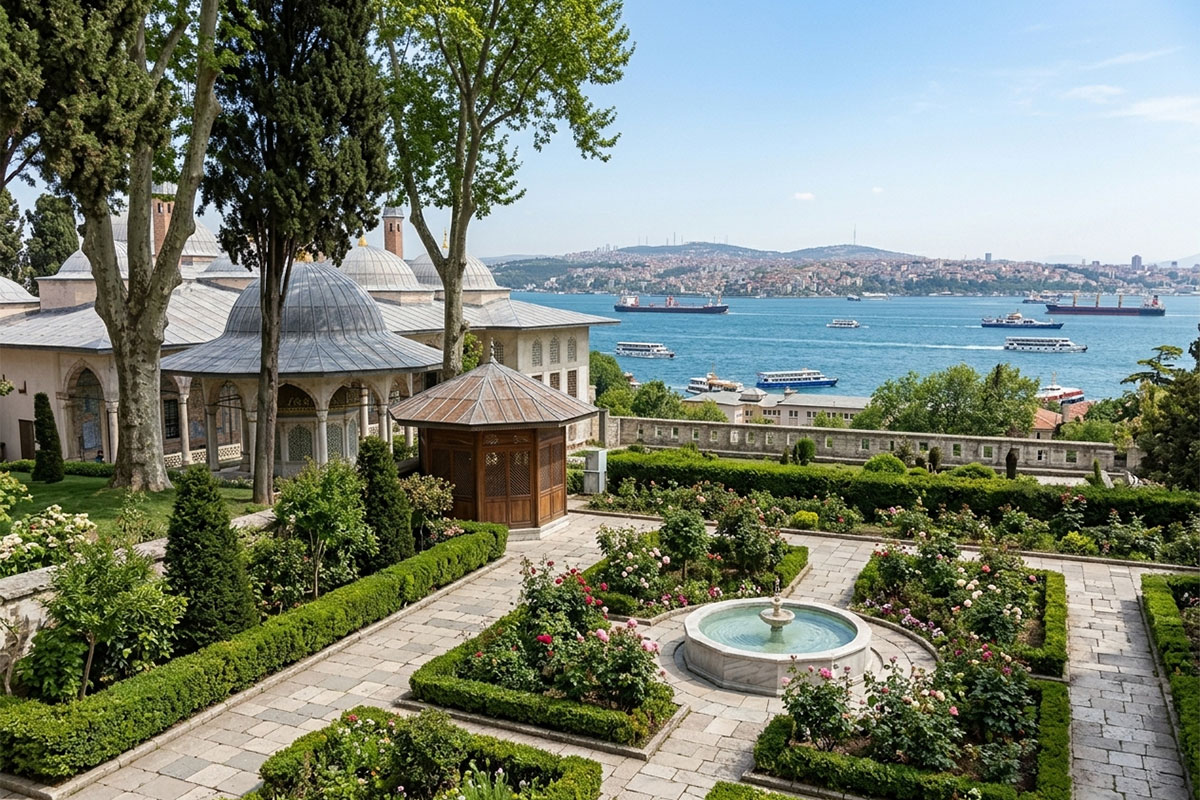
To understand the gardens of Topkapi, one must first grasp the philosophy behind Ottoman landscape architecture. Unlike the rigid, manicured geometry often found in European formal gardens like Versailles, Ottoman gardens prioritized a naturalistic aesthetic that respected the existing landscape. The design was driven by the concept of Cennet (Paradise), envisioned as a lush, shaded garden flowing with water. The architects of the palace utilized the natural topography of the Seraglio Point, allowing the gardens to cascade down toward the Bosphorus and the Golden Horn, creating a seamless visual connection between the land and the sea.
The layout was strictly hierarchical, mirroring the social structure of the court itself. As one moved from the outer courtyards to the inner sanctums, the gardens became increasingly private, manicured, and symbolic. Water was a central element, not just for irrigation but for its auditory qualities. Small fountains and reflecting pools were strategically placed to mask confidential conversations and to provide a soothing soundtrack that encouraged contemplation. The interplay of light and shadow, achieved through the careful placement of tall plane trees and pavilions, turned the gardens into a dynamic canvas that changed with the hours of the day.
A Journey Through the Courtyards
The progression through Topkapi’s courtyards is a journey from the public sphere to the intimate world of the Sultan. Each section of the garden served a distinct purpose, reflected in its botanical choices and layout.
The First Courtyard: The Alay Meydanı
The First Courtyard, also known as the Court of the Janissaries, was the only area accessible to the general public. Historically, this space functioned as a park-like waiting room for those seeking audience with the court officials. Here, the landscape is dominated by ancient plane trees (Platanus orientalis). These colossal trees were chosen for their longevity and massive canopy, symbolizing the strength and endurance of the Ottoman state. Even today, standing beneath their gnarled branches, one can sense the weight of history where Janissaries once gathered and foreign envoys waited in anticipation.
The Second Courtyard: A Silence of Cypresses
Passing through the Gate of Salutation, the atmosphere shifts dramatically. The Second Courtyard was the administrative heart of the empire, yet it was famous for its profound silence. Historical accounts from foreign ambassadors often noted the eerie quiet of thousands of people moving without a sound. This silence was amplified by the garden design, which featured rows of tall Cypress trees. In Ottoman culture, the Cypress represents mourning and eternity, as its evergreen nature points towards the sky. Between these trees, gazelles and peacocks were allowed to roam freely, adding a touch of untamed beauty to the center of political power.
The Fourth Courtyard: The Sultan’s Private Tulip Garden
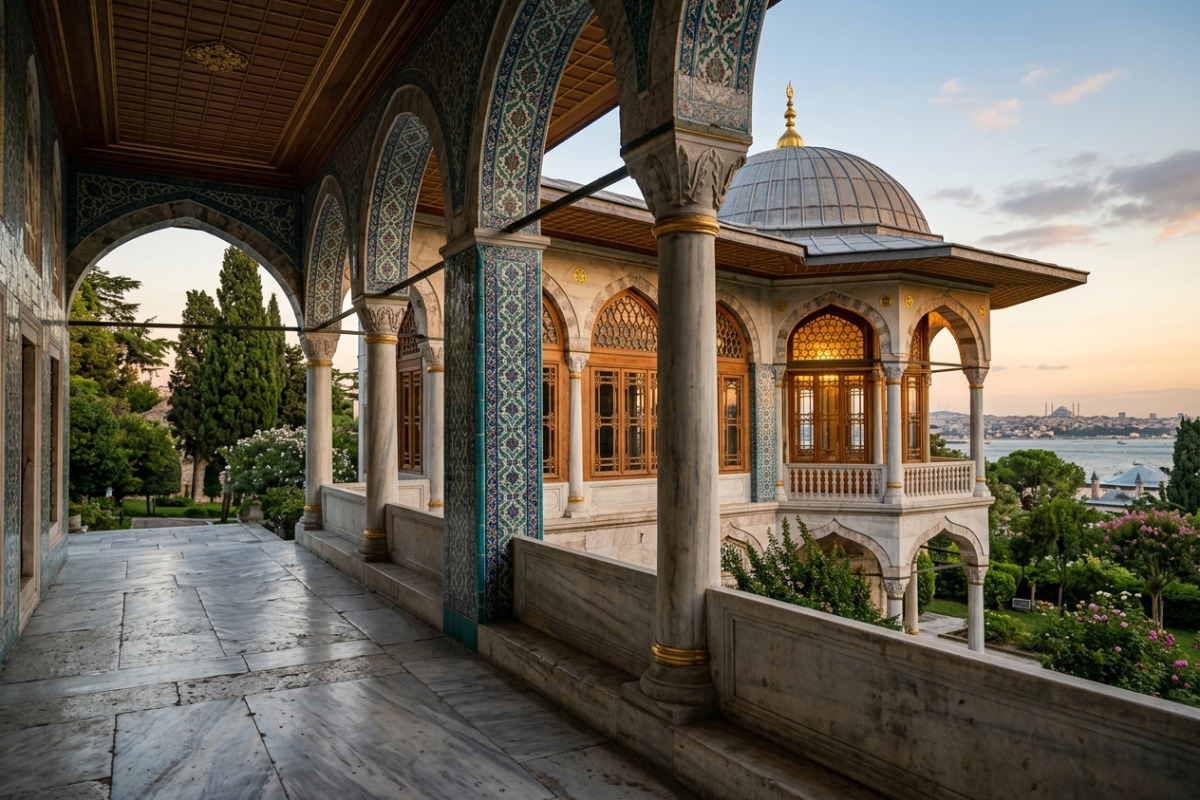
The Fourth Courtyard is the crown jewel of the palace’s horticultural heritage. This was the Sultan’s private sanctuary, a place of leisure removed from the burdens of statecraft. It is here that the famous Tulip Gardens (Lale Bahçesi) flourished. This area is terraced, offering breathtaking panoramic views of the Bosphorus. The garden design here is intimate, featuring sunken flower beds and marble pools. It was in this courtyard that the Sultan would compose poetry, listen to music, and enjoy the delicate beauty of the flowers that became synonymous with an entire era of Ottoman history. The Fourth Courtyard also housed various kiosks, each offering a unique perspective and function. The Baghdad Kiosk, for example, was built to commemorate the Ottoman victory in Baghdad and served as a place for the Sultan to receive dignitaries and enjoy the views. The Revan Kiosk, another notable structure, was built to celebrate the conquest of Yerevan and provided a tranquil space for relaxation and contemplation.
Symbolism in Flora: More Than Just Plants
Every plant chosen for the Topkapi Palace gardens carried a specific meaning. The Ottomans developed a complex language of flowers, where a garden was a text to be read by the educated eye. The selection was never random; it was a curated display of spiritual and cultural values.
The following table outlines the deep symbolism behind the primary flora found within the palace grounds:
| Plant / Tree | Symbolic Meaning | Usage in Garden Design |
| The Tulip (Lale) | Divine Unity (Allah) & Nobility | Planted in the Fourth Courtyard; represented the perfect aesthetic form and spiritual devotion. |
| The Cypress | Eternity, The Afterlife, & Silence | Used in the Second Courtyard to line paths; vertically directs the eye toward the heavens. |
| The Rose (Gül) | The Prophet Muhammad & Divine Love | Cultivated in the private Hasbahçe; the scent was considered sacred and spiritually uplifting. |
| The Plane Tree (Çınar) | Strength, Endurance, & The State | Dominates the outer courtyards; provides massive shade and represents the roots of the Empire. |
| The Judas Tree (Erguvan) | Royalty & The Color of Istanbul | Valued for its vibrant purple/pink blossoms in spring, matching the imperial colors. |
The Gardens as a Royal Retreat
Beyond their aesthetic and symbolic roles, these gardens were functional living spaces. For the Sultans, the gardens of the Fourth Courtyard were a necessary escape. The architectural kiosks scattered throughout this area—such as the Baghdad Kiosk and the Revan Kiosk—were designed to integrate seamlessly with the outdoors. Large windows and divans allowed the Sultan to feel immersed in nature even while indoors.
During the famous "Tulip Era" (Lale Devri) in the early 18th century, the cultivation of unique tulip varieties became an obsession. Garden parties were held at night, where tortoises with candles placed on their shells would wander through the flower beds, illuminating the blooms in a moving display of light. This whimsical use of the garden highlights how these spaces were used for entertainment and aesthetic pleasure. The gardens also served medicinal purposes; the palace had its own herbalists who cultivated plants for the royal pharmacy, blending the lines between beauty and utility.
Preservation and the Modern Experience
Visiting Topkapi Palace in January 2026, one can see the meticulous efforts taken to preserve the historical integrity of these green spaces. While the layout has evolved over centuries, the core principles remain. The restoration teams have worked to replant historical species, ensuring that the genetic lineage of the Ottoman flora continues.
- Seasonal Rhythms: In spring, the gardens explode with the color of thousands of tulips, recreating the glory of the Tulip Era. In winter, the stark beauty of the plane trees against the grey sky offers a melancholic, poetic atmosphere.
- The Viewpoints: The terraces of the Fourth Courtyard provide the best vantage points in the city to see the convergence of the Bosphorus, the Golden Horn, and the Sea of Marmara.
- Sensory Details: Visitors are encouraged to pause and listen. The sound of water trickling from fountains and the wind moving through the high branches creates a serene soundscape that contrasts with the busy city outside the walls.
The gardens of Topkapi Palace are not merely a backdrop for the buildings; they are an essential component of the palace's identity. They represent a sophisticated dialogue between power and nature, the temporal and the eternal. To walk these paths is to understand that for the Ottoman Sultans, the greatest luxury was not gold or silk, but the quiet contemplation of a perfect rose blooming by the Bosphorus.