Standing on the promontory of the Seraglio Point, where the waters of the Bosphorus meet the Golden Horn and the Sea of Marmara, Topkapi Palace is more than just a monument; it is a silent witness to history. For nearly four centuries, this sprawling complex served as the administrative headquarters and the primary residence of the Ottoman Sultans. Walking through its massive gates today, in January 2026, feels like stepping into a time capsule where the echoes of court intrigue, imperial ceremonies, and the daily lives of royalty still linger in the air. Unlike the European palaces that consist of a single massive building, Topkapi is a collection of pavilions, courtyards, and gardens, reflecting a nomadic heritage transformed into imperial grandeur.
The Origins: Mehmed the Conqueror’s Vision
The story of Topkapi Palace begins in the 15th century, shortly after the conquest of Constantinople in 1453. Sultan Mehmed II, known as Mehmed the Conqueror, desired a residence that would reflect the power and prestige of his expanding empire. Construction began in 1460 and was completed in 1478, though the palace was constantly evolved by subsequent sultans who added their own touches, pavilions, and renovations. It was not merely a home; it was a city within a city, housing up to 4,000 people at its peak.
The architecture is a stunning blend of Islamic, Ottoman, and Byzantine influences. As you wander from the outer courts to the inner sanctums, you can observe how the design shifts from public functionality to intense privacy. The palace layout is hierarchical, with each courtyard becoming more restricted and exclusive as you move deeper toward the Sultan’s private quarters.
Exploring the Four Courtyards
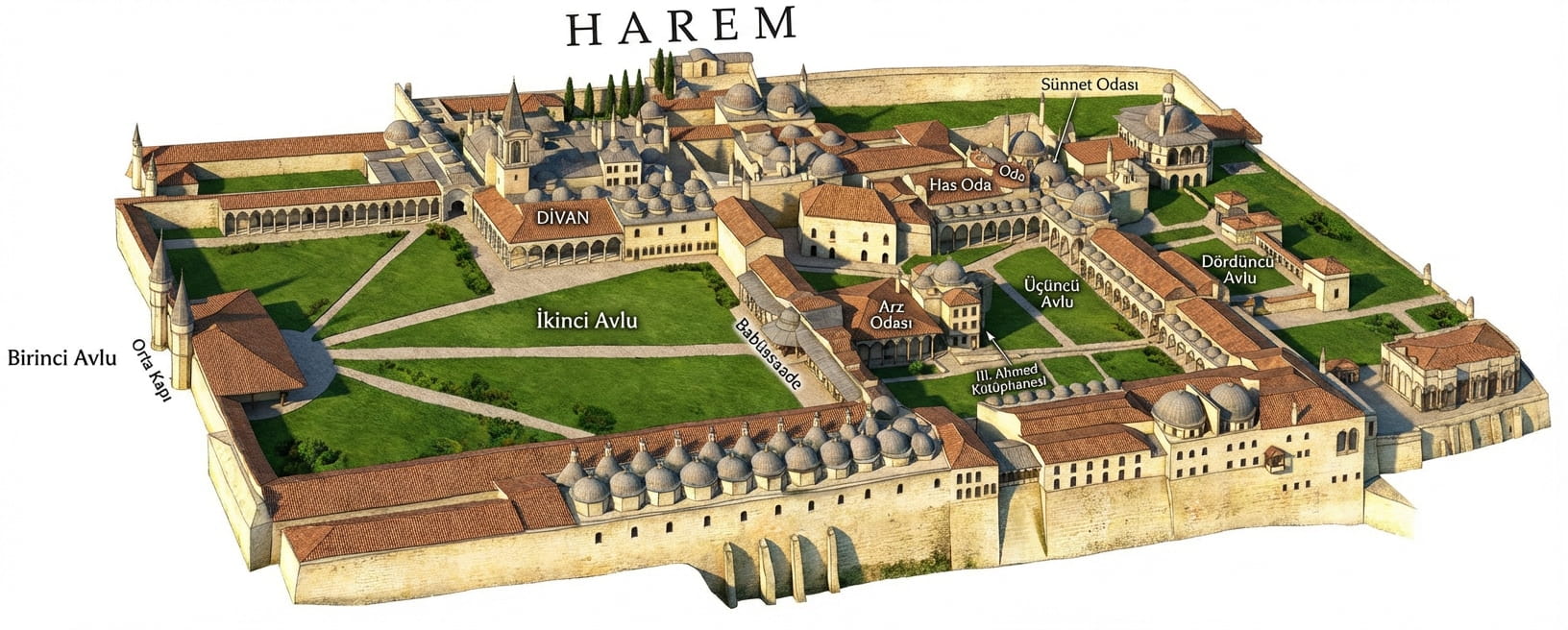
Topkapi Palace is organized into four distinct courtyards, each serving a specific function in the running of the empire. Understanding this layout is key to appreciating the flow of daily life during the Ottoman era.
The First Court: The Service Area
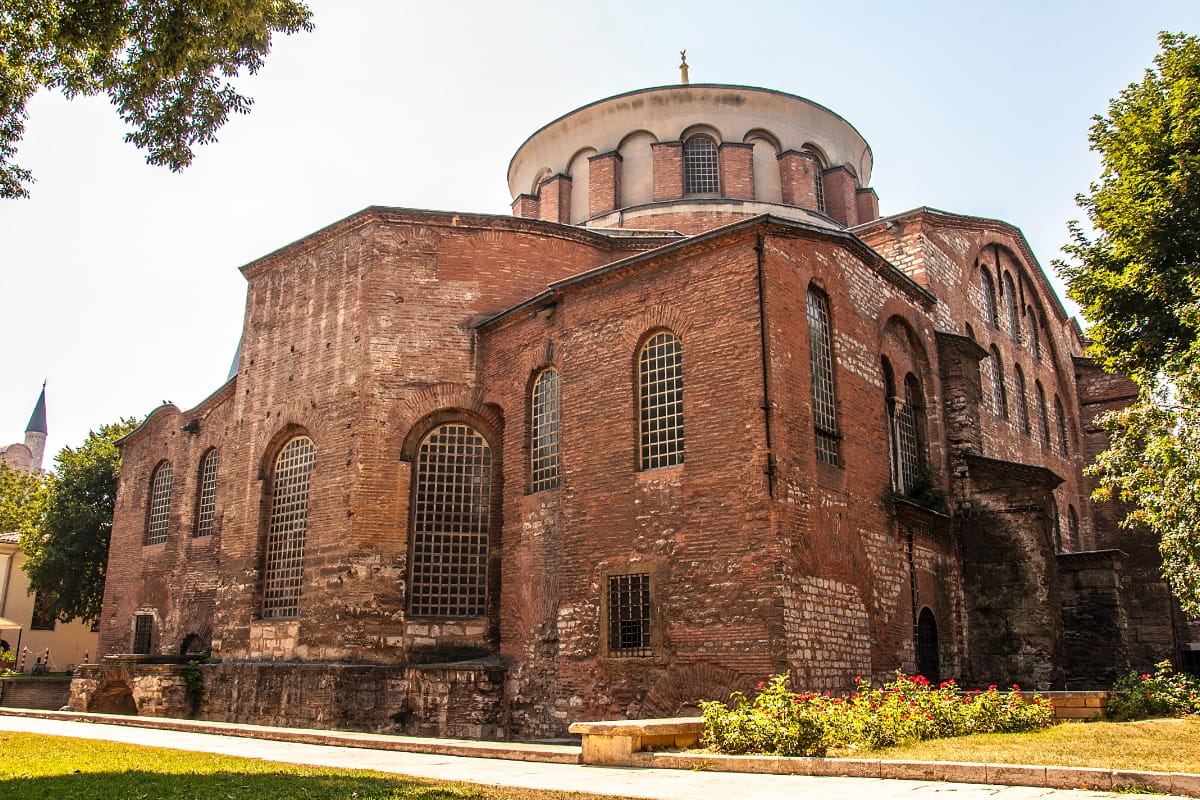
The First Court, also known as the Court of the Janissaries, is the largest and the only one that was open to the general public. Here, merchants, petitioners, and guards would mingle. It is home to the Hagia Irene, a Byzantine church that was never converted into a mosque, serving instead as an armory. The atmosphere here was one of hustle and bustle, a transition zone between the city and the monarch.
The Second Court: The Administrative Heart
Passing through the Gate of Salutation, you enter the Second Court. This was the administrative center where the state was run. The lush gardens here offer a peaceful contrast to the heavy political decisions made in the Divan-ı Hümayun (Imperial Council) chamber. It was here that the Grand Vizier and council members met to discuss matters of state, while the Sultan could secretly listen from behind a grilled window.
- The Imperial Council Hall: Admire the intricate gold-leaf ceilings and the distinct ottoman divans.
- The Tower of Justice: Rising above the council hall, symbolizing the Sultan's vigilance against injustice.
- The Kitchens: Located on the right side, these massive kitchens prepared food for thousands daily and now house a world-class collection of Chinese porcelain.
The Third Court: The Inner Palace
The Gate of Felicity marks the entrance to the Third Court, the private domain of the Sultan. This area was strictly off-limits to outsiders. It houses the Audience Chamber, where the Sultan received foreign ambassadors, and the Library of Ahmed III. The atmosphere here shifts to one of serenity and intellectual pursuit.
| Courtyard | Primary Function | Key Highlight |
| First Court | Public access, service area | Hagia Irene Church |
| Second Court | State Administration (Divan) | Imperial Council Chamber |
| Third Court | Private Residential & Education | Audience Chamber |
| Fourth Court | Gardens & Relaxation | Baghdad Pavilion |
The Harem: A World of Secrets
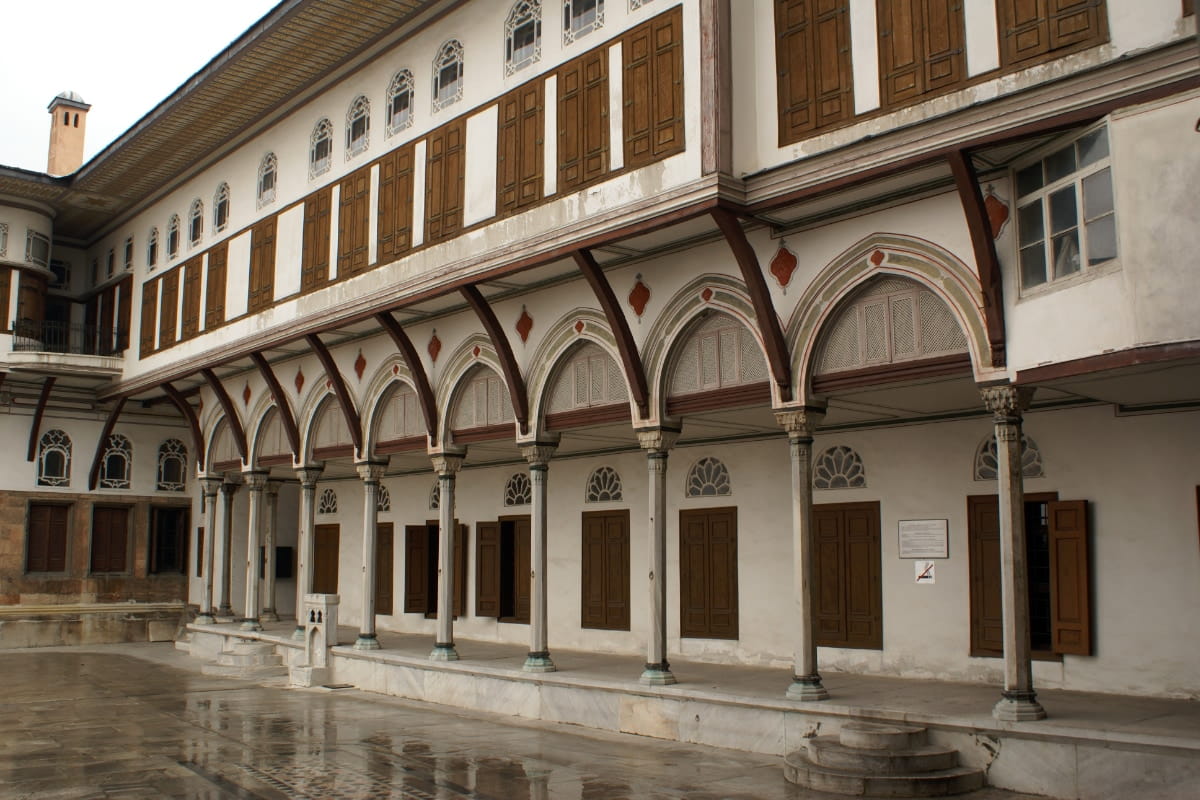
Perhaps the most curious and misunderstood section of Topkapi Palace is the Harem. Far from the orientalist fantasies of the West, the Harem was the private living quarters of the Sultan’s family, strictly governed by tradition and protocol. The word 'Harem' literally means 'forbidden' in Arabic. It was a complex social structure ruled by the Valide Sultan (The Queen Mother). The Harem housed not only the Sultan's wives and concubines but also his mother, sisters, daughters, and other female relatives, along with eunuchs who served as guardians.
Life within the Harem was highly structured, with its own hierarchy and rules. Education was highly valued, and many women received instruction in music, art, literature, and languages. The Valide Sultan wielded considerable power, advising the Sultan on matters of state and managing the affairs of the Harem. Competition for the Sultan's favor was fierce, and alliances and rivalries were common.
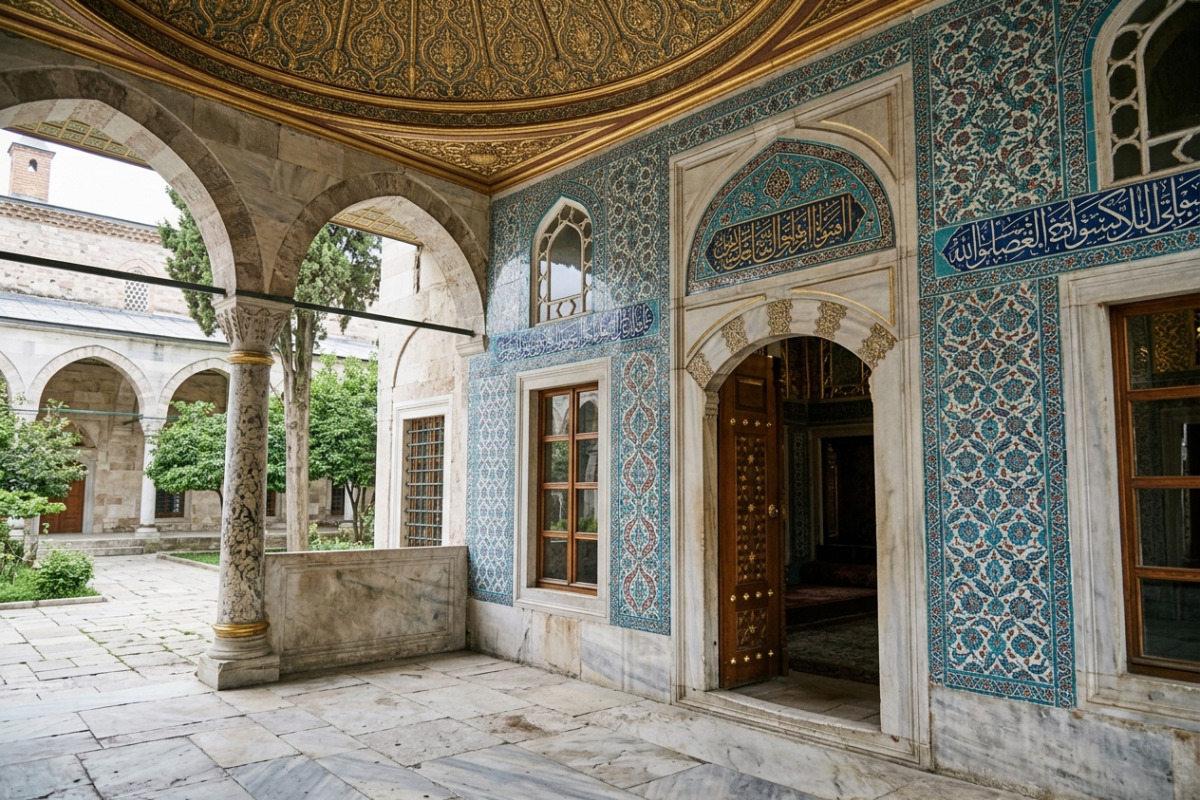
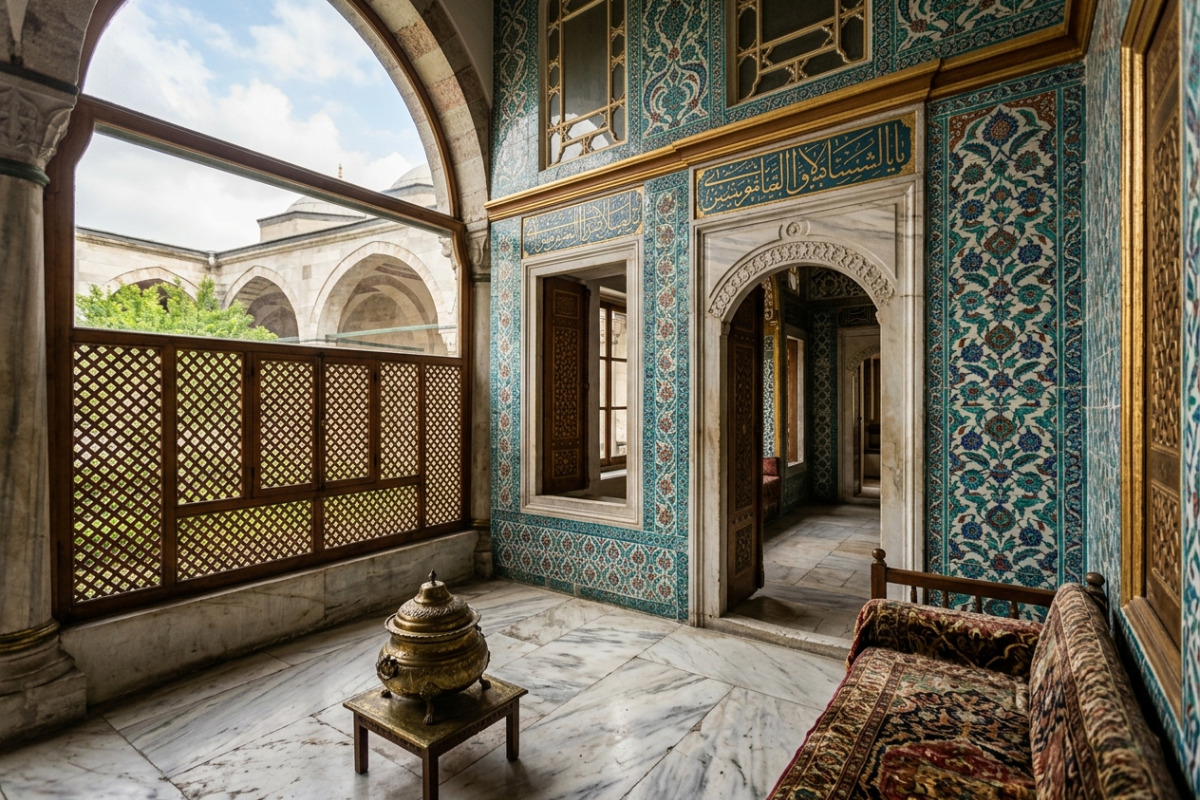
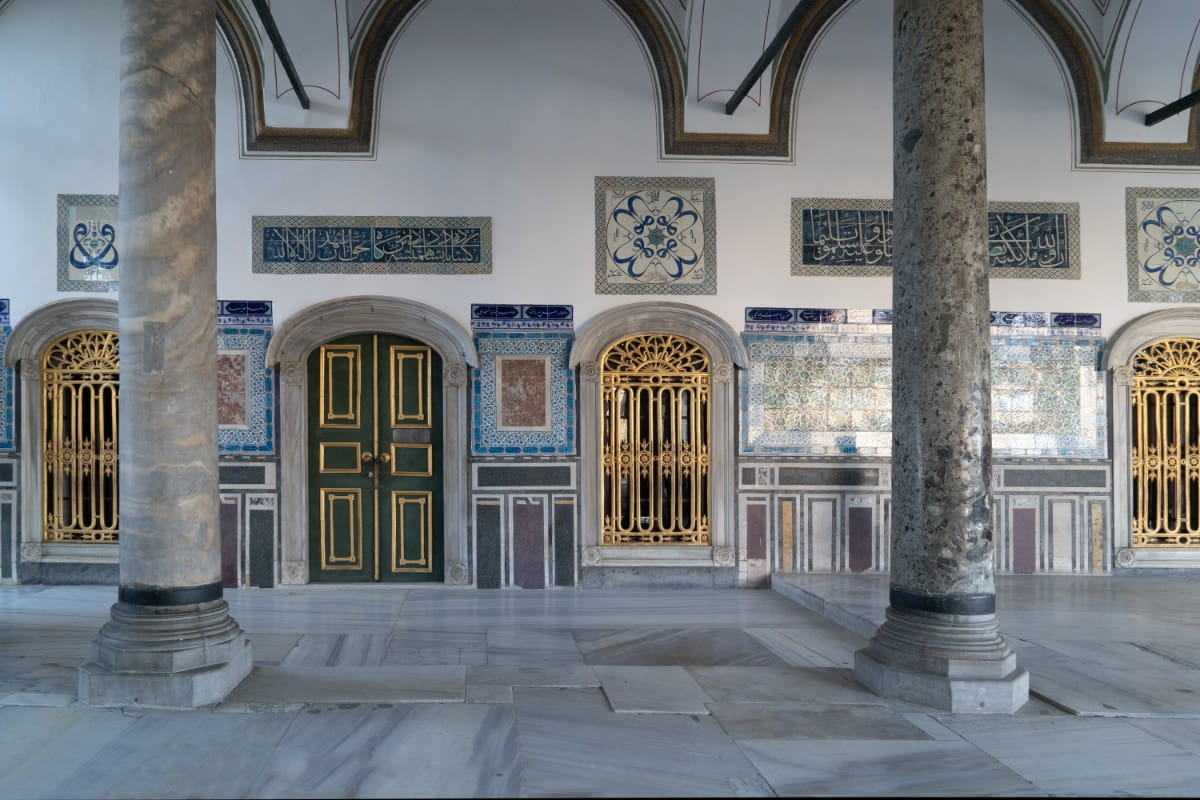
Walking through the Harem is a journey through narrow corridors, splendid courtyards, and exquisitely tiled rooms. The architectural beauty here is breathtaking. The Hall of the Emperor, with its massive dome and European-influenced decor, and the Apartments of the Queen Mother showcase the finest examples of 16th and 17th-century Iznik tiles. The vivid blues, turquoises, and coral reds of the tiles tell stories of floral gardens and geometric perfection, creating an eternal spring within the stone walls.
Treasures of the Empire: Significant Artifacts
No visit to Topkapi Palace is complete without stepping into the Imperial Treasury. The Ottomans were incredibly wealthy, and their treasury reflects the vastness of their conquests and the gifts received from other monarchs. The collection is dazzling, housing items that are priceless both in material and historical value.
The treasury is divided into several sections, each showcasing different types of artifacts, including weapons, jewelry, clothing, and ceremonial objects. The sheer opulence and craftsmanship of these items are a testament to the wealth and power of the Ottoman Empire. The treasury also holds significant historical documents, such as treaties and imperial decrees.
The Spoonmaker’s Diamond
The undisputed star of the treasury is the Spoonmaker’s Diamond (Kaşıkçı Elması). Weighing in at a staggering 86 carats, this pear-shaped diamond is surrounded by a double row of 49 smaller diamonds. Legends abound regarding its discovery, with one popular tale claiming that it was found by a poor man in a pile of refuse. Regardless of its origins, seeing it glitter under the museum lights is a mesmerizing experience that highlights the grandeur of the Ottoman court.
The Topkapi Dagger
Another masterpiece is the Topkapi Dagger, famously the subject of the movie 'Topkapi'. Crafted in the mid-18th century, the handle is embedded with three massive emeralds, topped with a small watch concealed under a lid. It was originally intended as a gift for the Shah of Iran but returned to Istanbul after the Shah's assassination.
Sacred Relics
For many visitors, the most spiritual section of the palace is the Chamber of Holy Relics. Since the 16th century, the Ottomans served as the Caliphs of the Islamic world, and they safeguarded the most sacred items of Islam. Here, you can view the mantle, sword, and bow of Prophet Muhammad, alongside other relics attributed to earlier prophets. The recitation of the Quran has continued in this chamber uninterrupted for centuries, adding a layer of sonic spirituality to the visual splendor.
The Fourth Court: Gardens and Views
After exploring the enclosed spaces and treasury, the Fourth Court offers a breath of fresh air. This series of pavilions and terraced gardens was the Sultan's private sanctuary for relaxation. The Baghdad Pavilion and the Revan Pavilion are architectural gems, built to commemorate military victories. They feature classic Ottoman layouts with plush seating and intricate tile work.
However, the true magic of the Fourth Court lies in its location. From the marble terrace, you are treated to one of the most spectacular views in Istanbul. You can see the ships navigating the Bosphorus, the Galata Tower across the Golden Horn, and the sprawling Asian side of the city. It is the perfect spot to pause and reflect on the history you have just traversed.
Final Thoughts for the Modern Traveler
Visiting Topkapi Palace is an immersive experience that requires time and imagination. As you walk through the Gate of Salutation or gaze at the jewels of the treasury, remember that you are standing in the very center of an empire that shaped the modern world. The blend of stunning architecture, deep history, and cultural significance makes it an essential stop for anyone seeking to understand the soul of Istanbul.