When you step through the Imperial Gate of Topkapi Palace, you are not merely entering a museum; you are crossing a threshold into a world where the echoes of the Ottoman Empire still resonate against the cold stone walls. While thousands of visitors flock to the famous Harem section or crowd around the Spoonmaker’s Diamond, the true soul of this sprawling complex lies in its shadows, in the lesser-known chambers that have witnessed centuries of silent intrigue. As we explore the palace in 2024, the winter light casting long, dramatic shadows across the courtyards, we invite you to look closer at the details most overlook. There is a palpable sense of mystery here, a feeling that the walls are guarding secrets that only the most patient observers can unravel.
Topkapi is vast, a city within a city, and for hundreds of years, it was the epicenter of power for a dominion that stretched across three continents. However, beyond the political grandeur lies a personal, often melancholic history trapped within hidden rooms and secluded corridors. These spaces hold artifacts that are not just objects of wealth, but vessels of stories—tales of secluded princes, ambitious concubines, pious sultans, and the silent servants who kept the empire running. To truly understand Topkapi, one must venture off the beaten path and delve into the mysteries of its hidden chambers.
Visiting Topkapi Palace: Topkapi Palace is open to the public daily except Tuesdays. Opening hours vary seasonally. It is recommended to check the official website for the most up-to-date information and to purchase tickets in advance to avoid queues. Consider allocating at least half a day to fully explore the palace and its hidden chambers.
The Golden Cage: Whispers from the Kafes
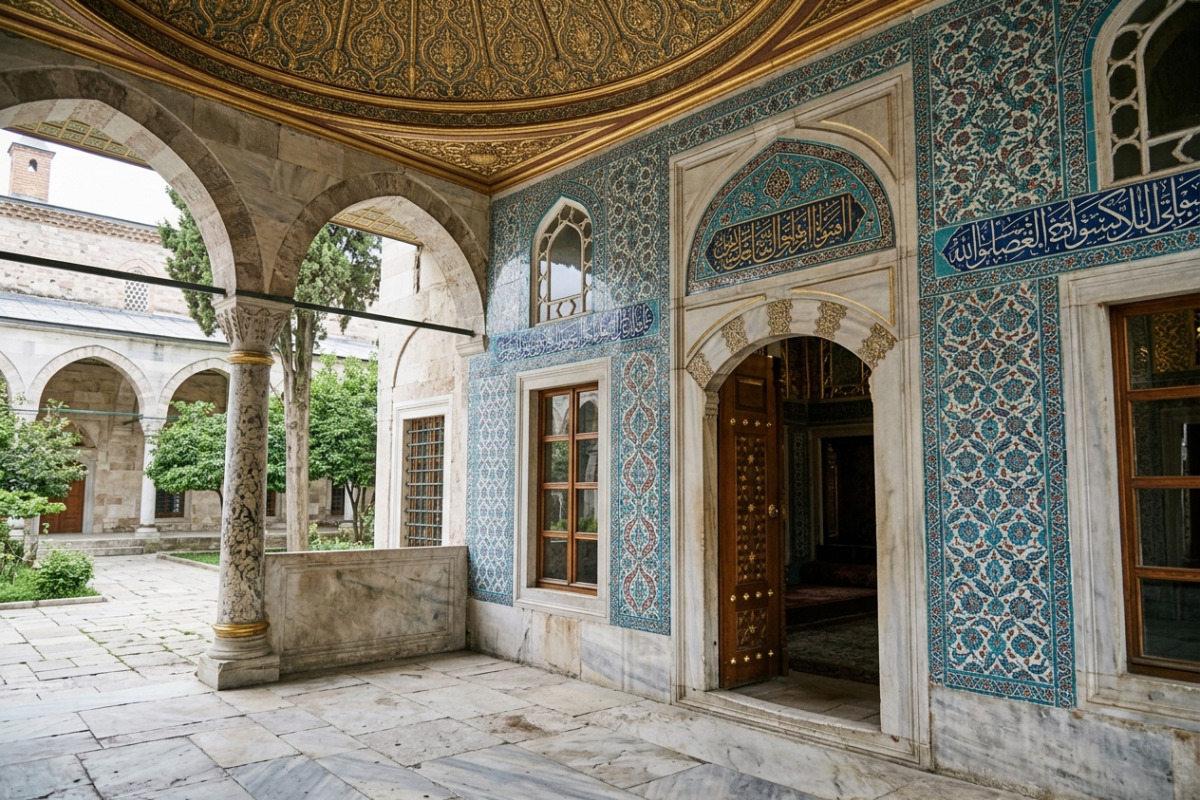
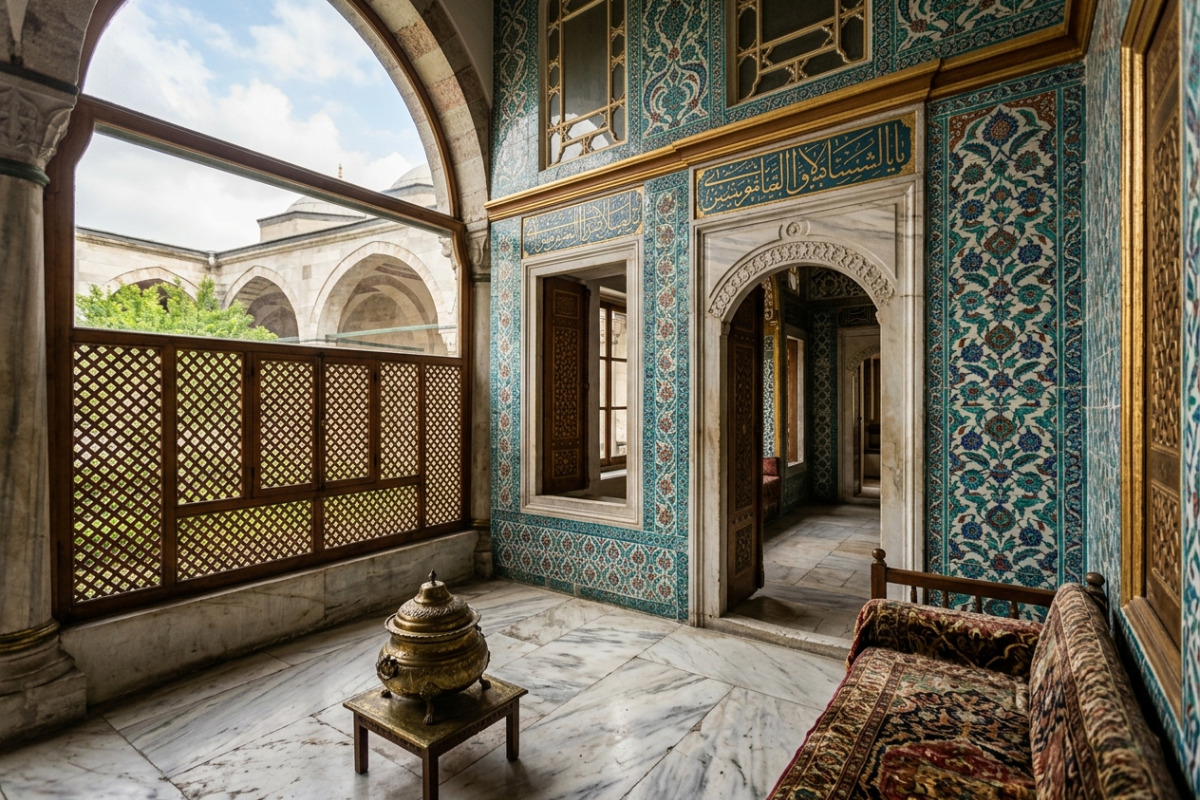
One of the most poignant and historically significant areas within the Harem is the "Kafes" or the Cage, a section of the Twin Kiosks apartments. For generations, this was the gilded prison for the crown princes of the empire, potential heirs to the throne who were kept in isolation to prevent rebellion against the reigning Sultan. The atmosphere here is heavy with the weight of waiting; princes would spend decades in these opulent but confined rooms, their only company being deaf-mute servants and barren concubines. The intricate tile work and the stained glass windows, while breathtakingly beautiful, served as the bars of a luxurious cell, cutting off the occupants from the reality of the world they might one day rule.
The artifacts found in proximity to these chambers tell a story of intellectual pursuit amidst isolation. Many princes turned to craftsmanship and the arts to maintain their sanity during their confinement. In the palace collections, you can find exquisite jewelry crafted by the princes themselves, intricate calligraphy practice sheets, and heavily annotated manuscripts. These items are not mere hobbies; they are the desperate expressions of men seeking purpose within a void. Holding a magnifying glass to these works reveals a level of detail that speaks of endless hours and an obsessive need for perfection, a silent testament to the psychological toll of the Kafes system.
The Chamber of the Holy Mantle: A Spiritual Fortress
Moving from the political to the spiritual, the Chamber of the Holy Mantle (Has Oda) offers a completely different energy, one of profound reverence and continuous prayer. This section houses the Sacred Relics of Islam, brought to Istanbul by Sultan Selim I after the conquest of Egypt in 1517. While the chamber itself is accessible, the aura of mystery surrounds the specific rituals and the hidden compartments where the most delicate relics were stored for centuries. The recitation of the Quran has continued in this chamber without interruption for over 500 years, creating a sonic landscape that seems to vibrate with spiritual intensity.
Among the artifacts displayed here, some are shrouded in legends that blur the line between history and faith. The Holy Mantle of the Prophet Muhammad is the centerpiece, kept in a golden chest, but there are other, more curious items that tell the story of the Ottoman claim to the Caliphate. From the ancient swords of the companions of the Prophet to a footprint preserved in stone, each object served to legitimize the Ottoman Sultans as the leaders of the Islamic world. The lighting in this chamber is deliberately dim, preserving the delicate fabrics and parchments, but also adding to the sense that you are entering a sanctum that was never originally intended for public eyes.
| Artifact Name | Origin / Period | Significance & Mystery |
| The Topkapi Dagger | Ottoman, 18th Century | Originally a gift for the Shah of Persia, it never reached him due to an assassination. It features a hidden watch in the hilt, symbolizing that 'time is ticking' for power. |
| The Staff of Moses | Attributed to Ancient Period | A slender, dark wooden staff believed to be the biblical rod. Its presence in Istanbul signifies the transfer of spiritual authority to the Ottomans. |
| Chinese Celadon Porcelain | Ming Dynasty Imports | Used in the imperial kitchens not just for beauty, but because it was believed to change color if the food contained poison. |
| Sultan’s Talismanic Shirts | Various Reigns | Cotton shirts inscribed with prayers and numerology, worn under armor. They took years to weave and were believed to make the wearer invincible in battle. |
The Imperial Treasury’s Forgotten corners
While the Spoonmaker's Diamond steals the spotlight, the Imperial Treasury is home to lesser-known artifacts that reveal the global reach and diplomatic intricacies of the empire. Hidden in the back rows of the display cases are items that tell stories of war, peace, and strange alliances. For instance, the collection includes elaborate canteens made of gold and encrusted with emeralds, used by Sultans during military campaigns. These were not just practical items; they were symbols of the Sultan's omnipresence and wealth, even in the dust and grime of the battlefield. The craftsmanship is so fine that one wonders how such delicate items survived the rigors of war.
Another fascinating aspect of the treasury involves the diplomatic gifts received from Europe and Asia, many of which were stored away and rarely used. You might find intricate European clocks that were stopped at the exact moment of a Sultan's death, or Russian furs that have long since disintegrated, leaving only their jeweled clasps behind. These objects offer a glimpse into the changing tides of foreign policy. They are silent witnesses to the moments when the Ottoman Empire looked outward, engaging with the world through the universal language of luxury and craftsmanship.
The Secrets of the Zülüflü Baltacılar Ward
Often bypassed by visitors rushing to the terraces, the Zülüflü Baltacılar (Halberdiers with Tresses) Ward is a hidden architectural gem that served the palace's woodcutters and logistical support staff. This area is a labyrinth of wooden dormitories, a mosque, and a hamam, offering a rare look at the lives of the people who served the court. Unlike the marble and gold of the Sultan's quarters, this area is constructed of warm timber and features a more domestic, intimate atmosphere. It feels incredibly lived-in, as if the halberdiers just stepped out for a moment and might return any second.
The artifacts discovered here are humble yet deeply evocative, painting a picture of daily life behind the palace walls. Excavations and restoration works have uncovered:
- Personal Pipes and Tobacco Pouches: Remnants of the leisure time enjoyed by the guards, carved with personal initials or intricate patterns.
- Practice Weapons: Blunted swords and heavy wooden maces used for training within the confined courtyards of the ward.
- Letters Home: Fragments of correspondence from soldiers to their families in distant provinces, revealing the human longing behind the uniform.
- Musical Instruments: Lutes and flutes, indicating that music and poetry were integral parts of the social life within the barracks.
The Library of Ahmed III: Knowledge as Power
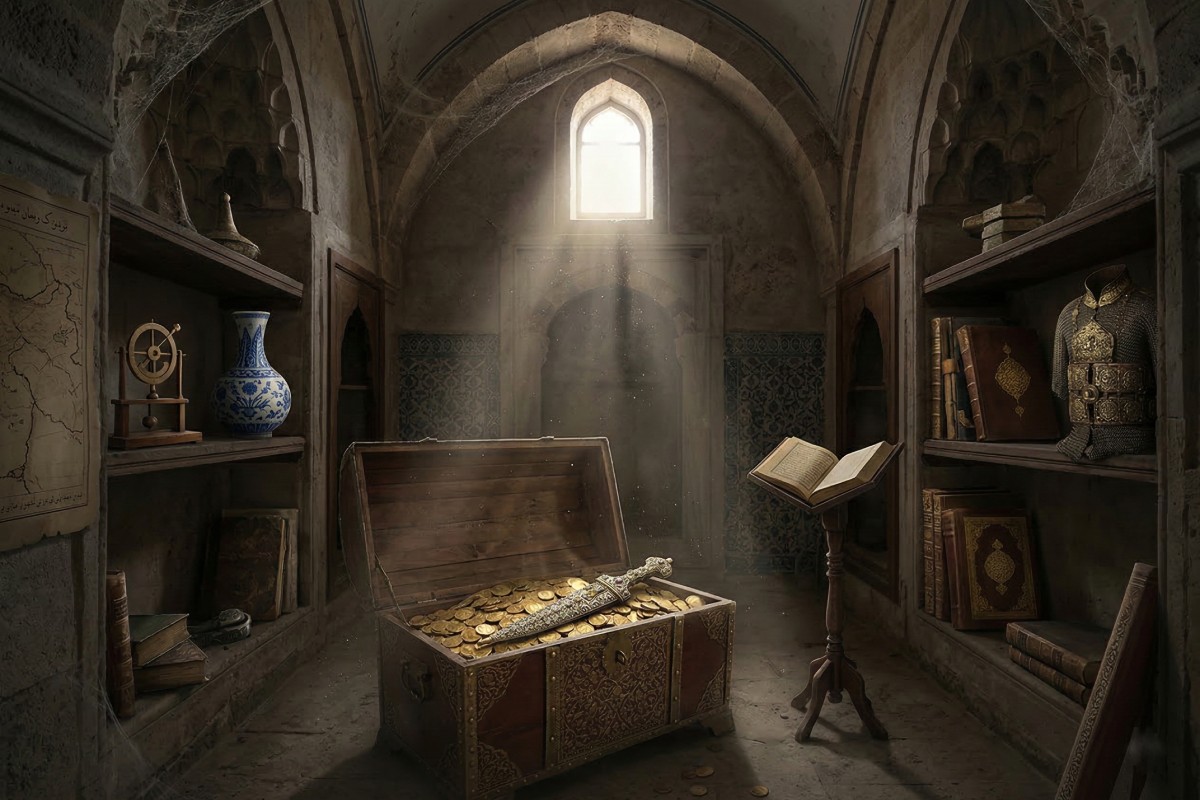
Nestled in the center of the Third Courtyard, the Library of Ahmed III is a testament to the intellectual appetite of the Tulip Era. While the architecture is stunning, with its tulip-motif tiles and low divans, the true secret lies in the manuscripts that were once housed here. This was not merely a collection of books; it was a repository of state secrets, maps of conquered lands, and scientific treatises translated from across the globe. The library represents a time when the empire was desperately trying to modernize and understand the shifting scientific landscape of Europe.
The hidden value here lies in the marginalia—the notes scribbled in the margins of these ancient texts by Sultans and viziers. These handwritten notes offer a direct window into the minds of the empire's rulers. They reveal their doubts, their curiosities, and their strategic thinking. To stand in this library is to stand in the brain of the empire, surrounded by the accumulated wisdom that guided decisions affecting millions of lives. It is a quiet, contemplative space that contrasts sharply with the busy courtyards outside.
Uncovering the Stories in 2024
As we wander through Topkapi Palace today, the restoration projects continue to peel back layers of history, revealing new chambers and artifacts that reshape our understanding of the Ottoman world. The beauty of Topkapi lies not just in what is displayed, but in what is felt—the lingering presence of the past in the cool air of the stone corridors. Each hidden chamber and every forgotten artifact adds a sentence to the grand narrative of this place, inviting us to listen closely to the whispers of history.
Exploring these hidden corners requires a slowing down of the senses. It asks you to look beyond the gold and jewels to find the human stories etched into wood, stone, and paper. Whether it is the melancholy of the Prince’s Cage or the spiritual intensity of the Holy Relics, Topkapi rewards the curious traveler with secrets that are as captivating as they are profound. This is a journey through time, where every shadow holds a story waiting to be brought into the light.
Note: For further research and verification of historical details, consult academic journals and reputable historical sources specializing in Ottoman history and Topkapi Palace.