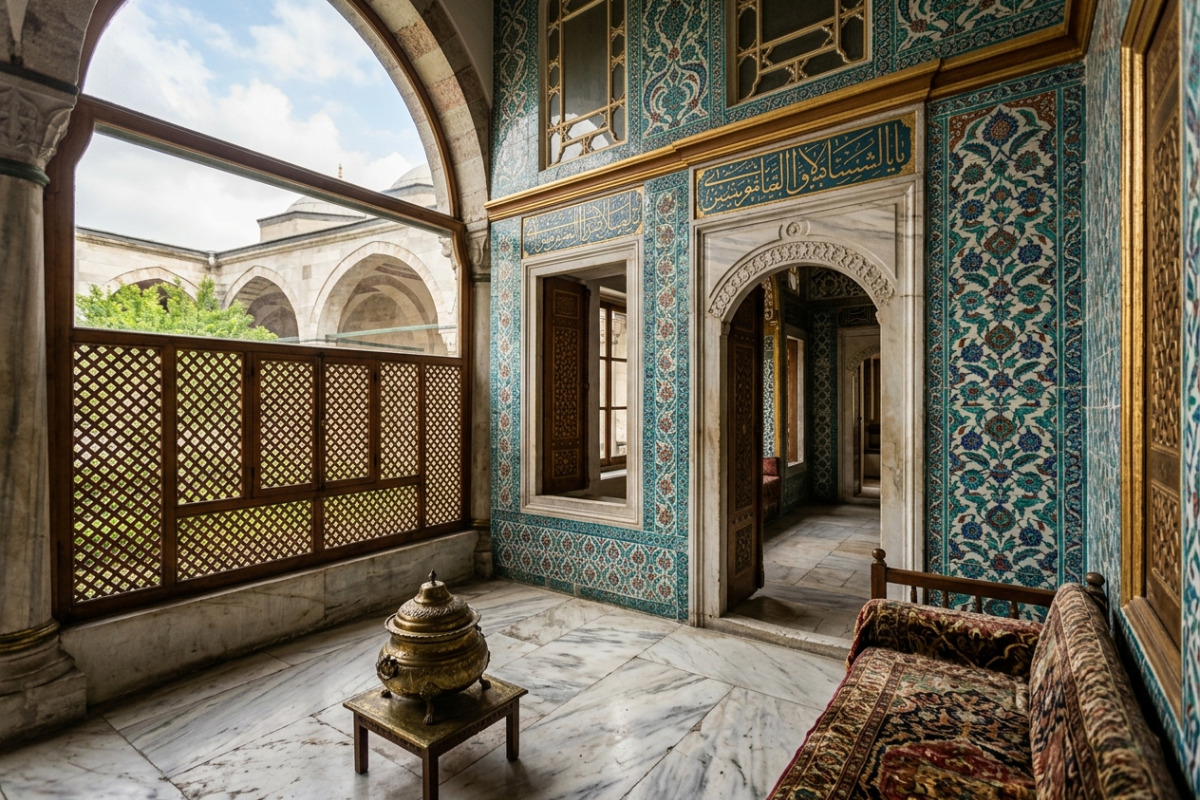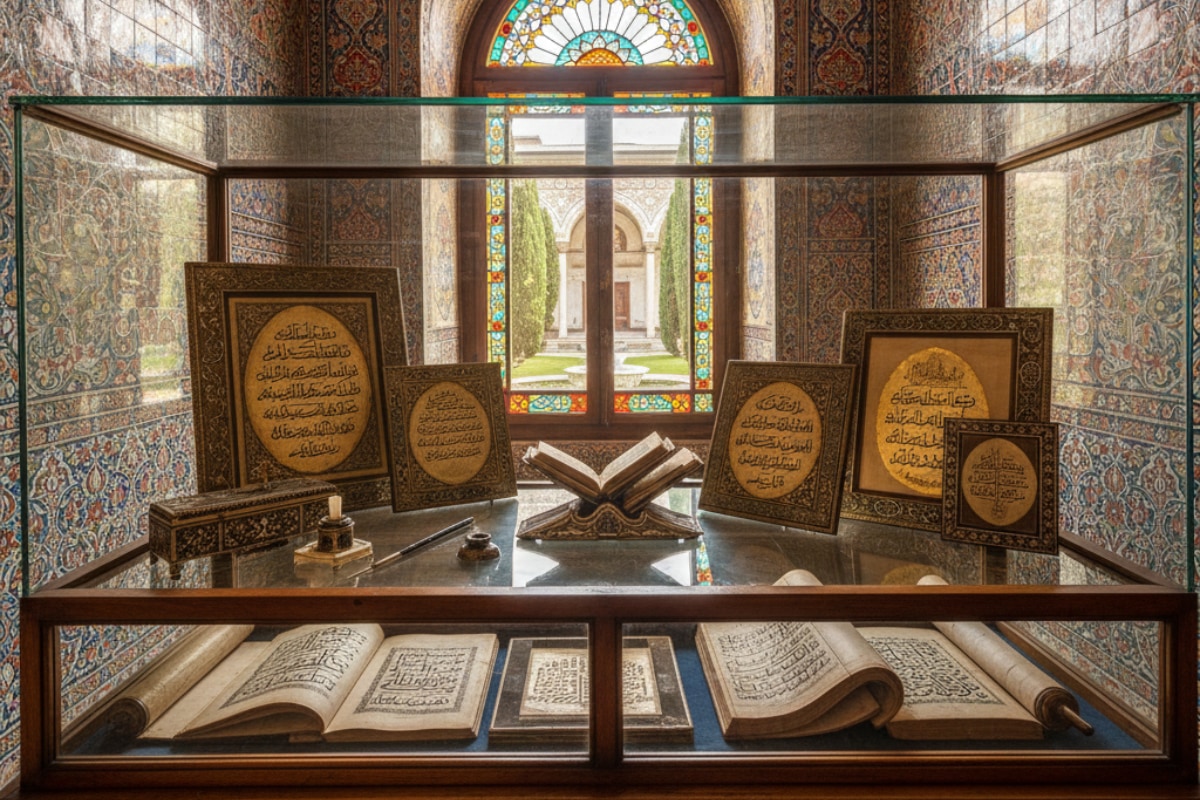
When you step into the hushed grandeur of a historic mosque in Istanbul or wander through the corridors of a museum in Turkey, your eyes are inevitably drawn upwards. There, dancing across domes and flowing along ceramic tiles, lies a visual symphony of ink and spirit. This is not merely writing; it is a manifestation of devotion, discipline, and aesthetic perfection. Ottoman calligraphy, or Hat Sanatı, represents the pinnacle of Islamic art, a tradition where the written word transcends its literal meaning to become a reflection of divine beauty. As we embrace the cultural richness of January 2026, the allure of this ancient craft remains as potent and captivating as ever, inviting travelers and art lovers alike to decipher its elegant mysteries.
The Soul of the Empire: Historical Significance
To understand the profound importance of calligraphy in the Ottoman Empire, one must first appreciate the cultural vacuum it filled. With religious traditions discouraging the depiction of sentient beings in holy spaces, artistic expression found its ultimate outlet in the beautification of the Word. However, Ottoman calligraphy was far more than a decorative substitute; it was the state's visual identity and a spiritual practice deeply entwined with Sufism. From the 15th century onwards, Istanbul became the undisputed center of this art form, giving rise to the famous saying: "The Quran was revealed in Mecca, recited in Cairo, and written in Istanbul."
The sultans themselves were often patrons and practitioners. They understood that the power of the empire was not just in the sword, but in the pen. The intricate Tughra (imperial monogram) that adorned firmans (royal decrees) was a symbol of authority designed with such mathematical precision and artistic flair that it became impossible to forge. This era transformed the Arabic script from a mere tool of communication into an abstract art form capable of evoking deep emotional and spiritual responses, a legacy that continues to define the Turkish aesthetic identity today.
Tools of the Trade: How the Magic Happens
The creation of a masterpiece requires tools as refined as the artist's hand. The process is organic, relying on natural materials that have been used for centuries. A calligrapher does not simply buy ink; they often craft it. The relationship between the scribe and their tools is intimate, bordering on the sacred. The preparation of these materials is a ritual in itself, requiring patience that modern life rarely affords.
- The Qalam (Reed Pen): The primary tool is the reed pen, harvested from specific riverbanks. It is cured in manure for months to harden and turn a rich brown. The tip is cut to a precise angle depending on the script style being written, a skill that takes years to master.
- The Ink (Mürekkep): Traditional ink is soot-based, often collected from the oil lamps of mosques like the Süleymaniye. It is mixed with gum arabic and water. This ink is fluid yet indelible, sliding effortlessly across the paper without fading over centuries.
- The Paper (Aharlı Kağıt): You cannot write on ordinary paper. The paper is coated with a mixture of egg whites and alum (ahar). This creates a smooth, glossy surface that allows the pen to glide and, crucially, allows mistakes to be scraped off without damaging the fibers.
- The Likka: A tuft of raw silk placed in the inkwell to regulate the amount of ink the pen absorbs, preventing blots and ensuring a consistent flow.
Decoding the Scripts: Styles of Ottoman Calligraphy
Ottoman calligraphy is not a monolith; it is a diverse ecosystem of scripts, each with its own rules, geometry, and purpose. While there are many styles, a few stand out for their ubiquity and historical importance. The Ottomans refined six primary scripts, known as Aqlam-i Sitta, but they also developed unique styles that were exclusively theirs.
| Script Style | Characteristics | Primary Usage |
| Thuluth (Sülüs) | Monumental, energetic, and highly decorative. Letters are large and interwoven. | Mosque inscriptions, titles, headings, and architectural friezes. |
| Naskh (Nesih) | Small, legible, and balanced. It is renowned for its clarity and readability. | Writing the Quran, books, and long texts. |
| Diwani | Cursive, complex, and decorative. Lines rise and fall like waves; often lacks dots. | Imperial decrees, firmans, and state correspondence (hard to forge). |
| Talik | Fluid and hanging, with no vertical lines. It looks like it is suspended from a line. | Poetry, literary works, and court chronicles. |
Masters of the Pen: Notable Calligraphers
The history of this art is written by the hands of geniuses who dedicated their lives to the perfect curve. Among the constellation of stars, a few shine the brightest. Sheikh Hamdullah (1429–1520) is often revered as the father of Ottoman calligraphy. He revolutionized the six standard scripts, softening their angularity and introducing a fluidity that defined the Ottoman style. Legend has it that Sultan Bayezid II held the inkwell for him, a testament to the reverence accorded to master scribes.
Centuries later, Hafiz Osman (1642–1698) brought a new level of aesthetic balance, particularly to the Naskh script used in Qurans. He is also credited with formalizing the Hilye-i Sherif, a graphic arrangement describing the physical and moral attributes of the Prophet Muhammad, which became a standard form in Turkish homes. In the 19th century, Mustafa Rakım bridged the gap between calligraphy and painting, creating monumental Thuluth compositions that adorn the friezes of Istanbul's most beautiful mosques. These masters did not just write; they composed visual music.
Another significant figure is Mahmud Celaleddin (1780-1829), known for his mastery of the Thuluth and Jeli Thuluth scripts. His innovative approach to composition and his ability to fill large spaces with harmonious designs made him a sought-after artist for mosque decorations and monumental inscriptions. His works can be seen in many significant mosques and public buildings across Istanbul.
Kazasker Mustafa İzzet Efendi (1801-1876) was another influential calligrapher of the 19th century. He excelled in various scripts, including Thuluth, Naskh, and Diwani, and served as the chief military judge (Kazasker), hence his title. His calligraphic panels are highly regarded for their elegance and precision, and he trained many prominent calligraphers of his time.
The Spiritual Dimension: Patience and the 'Meshk'
Learning Ottoman calligraphy is a journey of the soul as much as the hand. It is governed by the master-apprentice relationship, a bond that can last a lifetime. The training process, known as Meshk, begins with a single dot. The student may practice this dot for weeks until the master is satisfied. This teaches Sabr (patience) and Edep (spiritual manners). There are no shortcuts. A calligrapher might practice a single letter thousands of times to achieve the perfect ratio, known as the Golden Section.
Upon completing the rigorous training, which can take nearly a decade, the student receives an Icazetname (diploma) during a traditional ceremony. This document grants them permission to sign their work, linking them to a chain of masters stretching back centuries. This spiritual lineage ensures that the art remains pure, disciplined, and deeply connected to its roots, even in our modern, fast-paced world.
Where to Experience Ottoman Calligraphy Today
For the modern traveler exploring Turkey, the legacy of these masters is accessible and alive. The Topkapi Palace Museum houses one of the world's most significant collections of calligraphic manuscripts and imperial edicts. A visit to the Sakıp Sabancı Museum often reveals stunning temporary exhibitions focused on book arts. However, the true scale of this art is best experienced in the monumental inscriptions of the Hagia Sophia Grand Mosque and the Blue Mosque, where giant roundels and domes proclaim divine names in letters taller than a human being.
Furthermore, walking through the backstreets of Beyazıt or Üsküdar, you might stumble upon small workshops. Here, contemporary artists continue to dip their reed pens into soot ink, keeping the tradition alive. Watching a master at work is a mesmerizing experience; the silence of the room is broken only by the rhythmic scratching of the reed on paper, a sound that has echoed through Istanbul for over five hundred years. Ottoman calligraphy is not a relic of the past; it is a living, breathing testament to the pursuit of beauty and the eternal dance of the pen.
For those interested in learning more or even trying their hand at this ancient art, several workshops are available in Istanbul. The Turkish Calligraphy Foundation offers courses for all levels, from beginners to advanced students. Additionally, many local art centers and cultural organizations host workshops and demonstrations. A quick online search for "Ottoman calligraphy workshops Istanbul" will reveal a range of options to suit different schedules and interests. Taking a workshop provides a unique opportunity to connect with the art form on a deeper level and appreciate the skill and dedication required to master it.