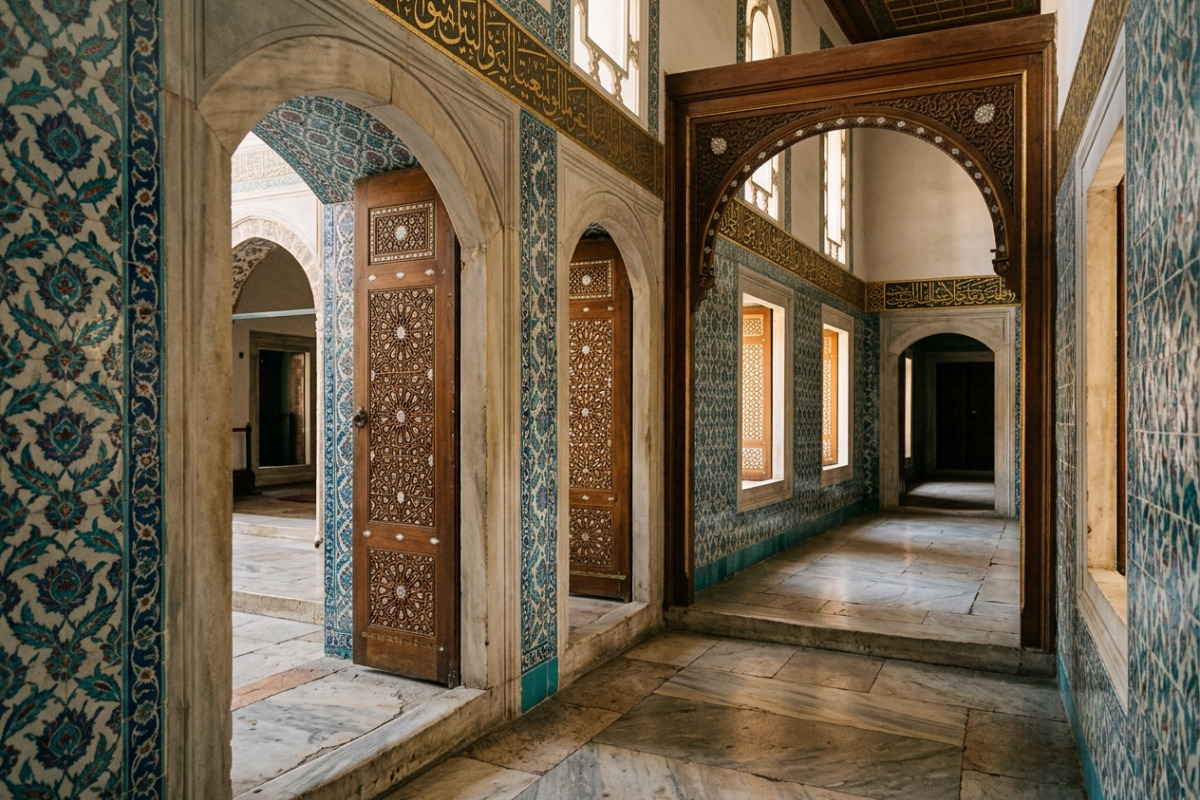
When you step through the imposing Imperial Gate of Topkapi Palace, you are not merely entering the residence of sultans; you are walking into a physical manifestation of an empire that once bridged East and West. The Ottoman Empire was never a monolith; it was a vibrant tapestry woven from the threads of dozens of cultures, languages, and artistic traditions. As we explore the palace grounds in January 2026, the collections housed within these walls tell a story far grander than just military conquest. They speak of trade routes that spanned continents, diplomatic friendships that crossed religious divides, and a profound appreciation for beauty, regardless of its origin. To understand Topkapi is to understand the world as it was viewed from Istanbul—a city that sat at the center of the map, absorbing influences from the Danube to the Nile, and from the Tabriz to Vienna.
The Silk Road Connection: Treasures from the Far East
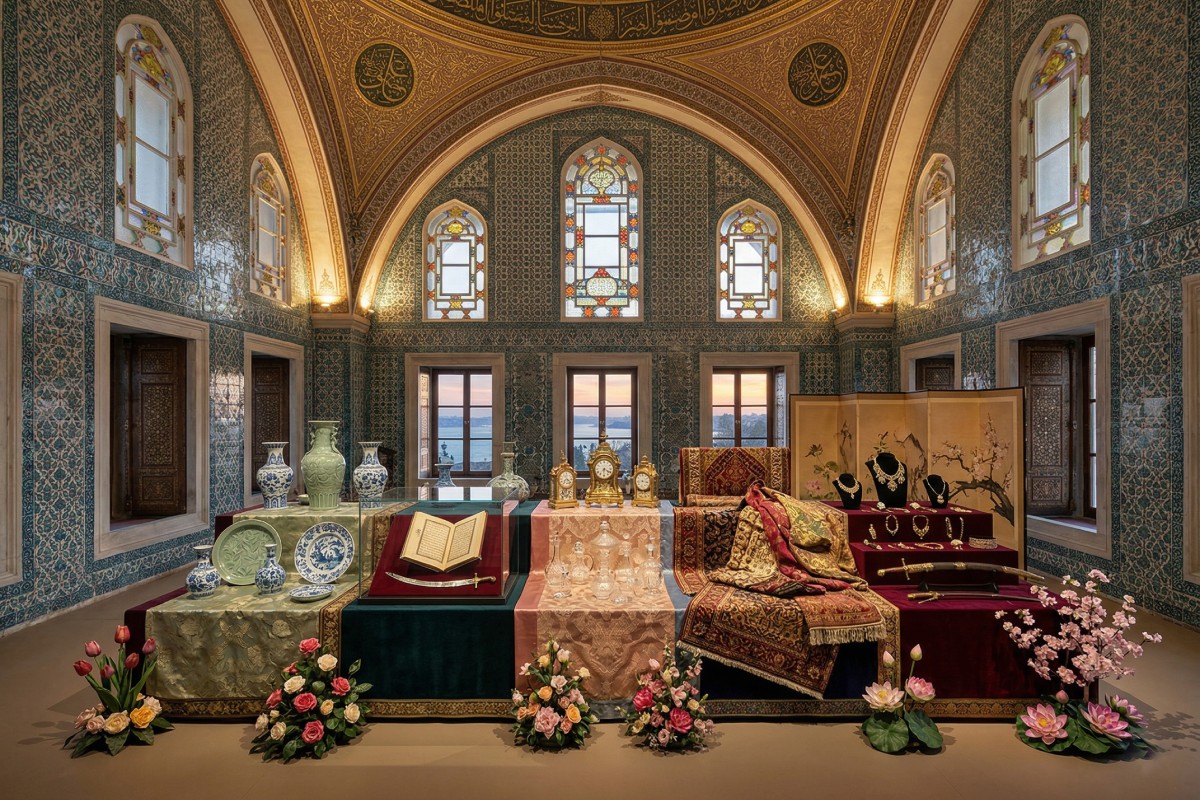
One of the most staggering realizations for visitors is the sheer volume and quality of Far Eastern art residing in the heart of Istanbul. The Palace Kitchens, now a museum section, house one of the most significant collections of Chinese porcelain outside of Beijing. This is not a coincidence but a testament to the vital importance of the Silk Road. For centuries, the Ottomans controlled the western terminus of this legendary trade route, and the sultans developed an insatiable appetite for the craftsmanship of the Ming and Yuan dynasties. The collection includes over 10,000 pieces, ranging from the famous blue-and-white vases to the mysterious celadon ware.
The fascination with celadon, in particular, reveals a unique intersection of art and palace intrigue. These green-glazed bowls were prized not just for their aesthetic similarity to jade but for a persistent myth that they would change color or break if they came into contact with poisoned food. In a court where survival was often a game of wits, such imported items became essential survival tools wrapped in exquisite artistry. Beyond the practical, the floral motifs and dragon designs found on these porcelains began to influence local Ottoman ceramicists, leading to a fusion of styles that would eventually give birth to the distinct Iznik tile tradition. The Chinese influence here is a clear reminder that the Ottomans looked East for artistic inspiration just as much as they looked West for political expansion.
Consider this: How might the availability of such exotic items have impacted the daily lives and power dynamics within the palace?
A Symphony of Time: European Mechanical Marvels
While the kitchens whisper tales of the East, the Clock Section of the palace ticks with the mechanical ingenuity of the West. The Ottoman court had a profound fascination with time, driven both by the necessity of the five daily prayers and an intellectual curiosity about European technology. This collection is a dazzling display of diplomatic gifts presented by European monarchs to the Ottoman Sultans. You will find intricate grandfather clocks, pocket watches, and table clocks crafted by the masters of England, France, Germany, and Switzerland.
These items were more than just functional timekeepers; they were symbols of a thawing relationship between the Sublime Porte and the powers of Europe. During the 18th and 19th centuries, as the empire sought to modernize, the exchange of such gifts became a language of its own.
- English Automata: Elaborate clocks featuring moving figures and musical chimes, often gifted to secure trade rights in the Levant.
- French Rococo: Timepieces heavily adorned with gold leaf and enamel, reflecting the lavish tastes of the French court which the Ottoman elites began to emulate in the later periods.
- Ottoman Modifications: Interestingly, many European clocks were modified upon arrival, with dials repainted to feature Ottoman numerals, showcasing how foreign technology was adapted to local needs.
Reflect on this: What does the Ottoman adaptation of European clocks reveal about their approach to modernization and cultural identity?
The Spiritual Heart: Sacred Relics from the Arab World
Perhaps the most emotionally charged section of the palace is the Chamber of the Holy Relics. Here, the multicultural influence shifts from the artistic and technological to the deeply spiritual, anchoring the Ottoman claim to the Caliphate. Following the conquest of Egypt in 1517 by Sultan Selim I, the guardianship of the holy cities of Mecca and Medina passed to the Ottomans. Along with this title came the most precious artifacts of the Islamic world, transferred from Cairo and the Arabian Peninsula to Istanbul. This collection represents the empire's integration of the Arab world's spiritual heritage into its imperial identity.
The presence of these items—including the Holy Mantle of Prophet Muhammad, his sword, and early manuscripts of the Quran—transformed Topkapi from a mere administrative center into a sanctuary. The recitation of the Quran has continued uninterrupted in this chamber for centuries, a tradition that persists today. The artistry of the reliquaries (the containers holding these items) often displays a blend of Mamluk and Ottoman goldsmithing techniques. It serves as a poignant reminder that the empire was a guardian of Islamic history, preserving artifacts that originated thousands of miles away in the deserts of Arabia, ensuring their safety within the vaulted halls of Istanbul.
Consider: How did the acquisition of these relics impact the Ottoman Empire's standing within the Islamic world?
Gemstones and Gold: Artistic Fusion in the Imperial Treasury
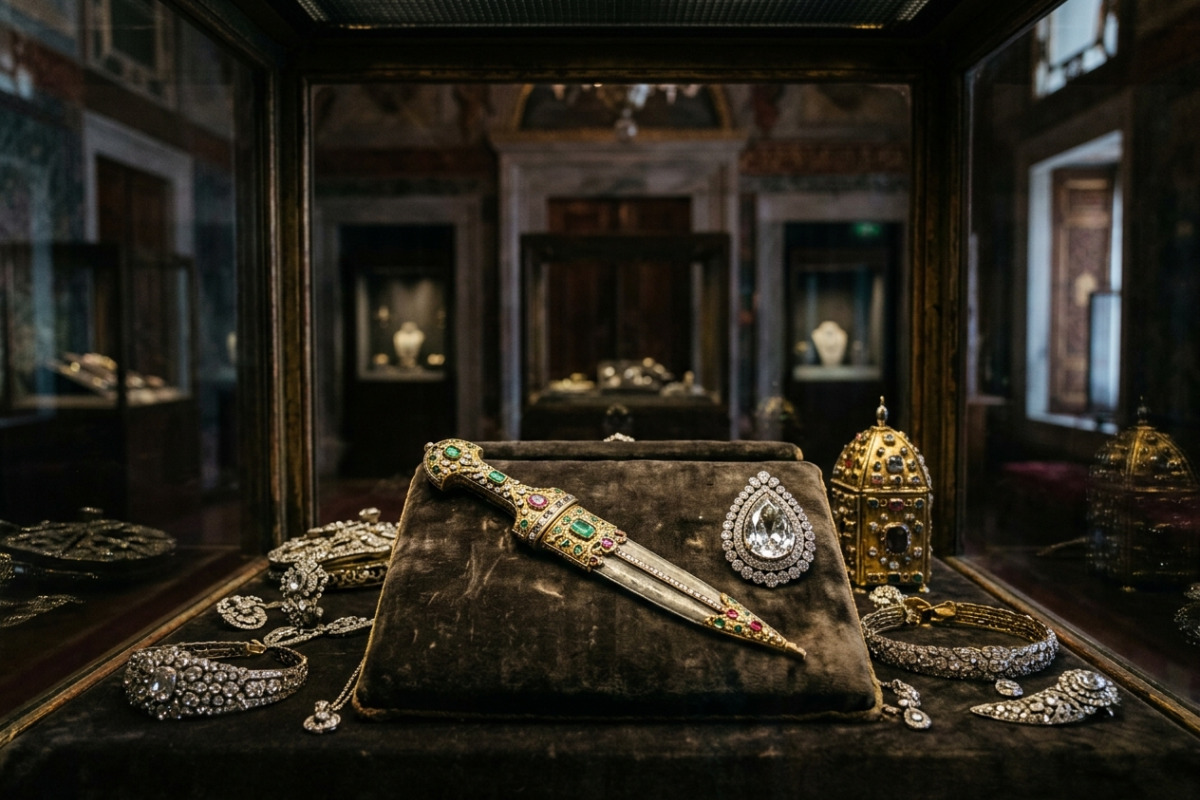
The Imperial Treasury is where the diverse influences of the empire truly dazzle the eye. The jewelry and ceremonial objects found here are not strictly "Turkish" in design but are a hybrid of Persian, Indian, and Balkan aesthetics. The famous Topkapi Dagger, with its three enormous emeralds, is a prime example of this cross-cultural craftsmanship. It was originally intended as a gift for the Shah of Persia, Nadir Shah, and its design reflects the opulent style favored in the Iranian courts, yet it was crafted by Ottoman artisans.
Similarly, the influence of Mughal India is evident in the usage of uncut gemstones and the specific techniques of setting stones into jade. The flow of gems from the mines of South America (via European trade) and South Asia (via Eastern trade) converged in the workshops of Topkapi. The artisans themselves were a diverse group; the palace payrolls list goldsmiths from Armenia, the Balkans, Persia, and Georgia, all working side-by-side. This collaboration resulted in a unique "Palace Style" that transcended ethnic boundaries.
Snapshot of Cultural Origins
To better understand the geographical breadth of the collections, consider the following breakdown of key items and their origins:
| Region of Influence | Key Artifacts | Cultural Significance |
| East Asia (China/Japan) | Celadon bowls, Blue & White Porcelain | Silk Road trade dominance, status symbols, and influence on Iznik ceramics. |
| Western Europe | Mechanical Clocks, Silverware, Crystal | Diplomatic relations, modernization efforts, and technological exchange. |
| Arabian Peninsula | Holy Mantle, Swords of the Sahaba | Legitimacy of the Caliphate and spiritual authority of the Sultan. |
| Persia & India | Emerald Daggers, Jeweled Thrones | Artistic exchange, shared techniques in gem setting and metalwork. |
| Central Europe | War spoils, Armor, Hungarian Swords | Military history and the adaptation of European weaponry styles. |
Arms and Armor: A collection of Conquest and Defense
The military collection at Topkapi is another area where diversity is starkly visible. It is not just a collection of Ottoman weaponry, but a library of warfare from across the known world. You will find Mamluk helmets with their distinct conical shapes, heavy European broadswords captured during campaigns in the Balkans, and intricate Persian shields. The Ottomans were pragmatic; they studied the weapons of their adversaries and often incorporated foreign designs into their own arsenal. The collection highlights how the empire was in a constant state of technological dialogue with its neighbors, whether through trade or on the battlefield.
Think about it: How did the Ottoman's willingness to adapt foreign weaponry contribute to their military successes?
Conclusion: A Museum of the World
Visiting Topkapi Palace is far more than a lesson in Turkish history; it is a journey through the interconnected history of the world. The collections serve as a mirror reflecting the vast reach of an empire that sat at the crossroads of civilization. From the delicate touch of Chinese porcelain to the precise tick of an English clock, and from the spiritual weight of Arabian relics to the glitter of Indian emeralds, every object tells a story of movement, exchange, and adaptation.
As we wander through these halls, we are reminded that diversity was not just a modern concept but a lived reality for the Ottoman court. The palace was a place where the best of the world was gathered, appreciated, and preserved. So, the next time you stand before a display case in Topkapi, look beyond the gold and the jewels. Look for the invisible threads that connect that object to a artisan in Beijing, a clockmaker in London, or a pilgrim in Mecca. That is the true treasure of Topkapi.
Further Exploration: To deepen your understanding, consider exploring online resources such as the Topkapi Palace Museum's official website, academic articles on Ottoman art and culture, and virtual tours that showcase the palace's diverse collections. You can also find high-resolution images of key artifacts to appreciate their intricate details.